Is My Cat an Introvert or an Extrovert?
The doorbell rings. One cat vanishes under the bed so fast you’d swear she teleported. The other cat trots to the door like she’s been expecting this exact guest her whole life, tail up, ready to supervise the coat-hanging. Same household, same food bowls, wildly different opinions about strangers.
If you’ve ever wondered whether your cat is an introvert or an extrovert, congratulations: you’ve stumbled onto the first and arguably most visible dimension of feline personality. It’s the Social vs Solitary axis, the same E/I split that anchors the cat personality test here at PurrJung. And once you learn to read it, a lot of your cat’s mysterious behavior stops being mysterious.
What “Introvert” and “Extrovert” Actually Mean for a Cat
Let’s clear up the biggest myth first: an introverted cat is not a sad cat, a broken cat, or a cat who doesn’t love you. And an extroverted cat isn’t needy or badly behaved. This dimension isn’t about how much affection a cat feels — it’s about where they get their energy and how they’d prefer to spend it.
Borrowing loosely from the human framing:
- Extroverted cats are energized by interaction. People, other pets, activity, novelty — it fills their tank. Leave them alone too long and they get restless or vocal.
- Introverted cats are energized by calm and control over their environment. They love you deeply, but socializing spends energy rather than making it. They recharge in a quiet spot, alone, on their own schedule.
Neither is better. They’re just different operating systems. The trouble only starts when we try to run introvert software on extrovert expectations, or vice versa.
Signs You’re Living With an Introverted Cat
Introverted cats tend to be watchers. They like to understand a situation before they enter it, and they’d rather observe the party from the top of the bookshelf than work the room.
Common tells:
- They disappear when guests arrive and reappear, casually, twenty minutes after everyone leaves — as if they’d been there the whole time.
- They’re a “one-person cat.” They pick their human, bond hard, and treat everyone else as acceptable background staff.
- They observe from a distance. You’ll catch them studying you from across the room, perfectly content to be near rather than on top of you.
- They prefer quiet and routine. Loud noises, rearranged furniture, and unexpected visitors all cost them something.
- Their affection is deliberate. When an introverted cat chooses to curl up on your lap, it lands differently — because it was a decision, not a reflex.
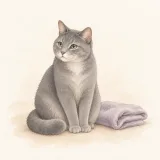
If this is your cat, you may recognize the quietly strategic energy of The Shadow Stalker (INTJ): independent, observant, deeply loyal to a chosen few, and entirely uninterested in performing for a crowd.
Signs You’re Living With an Extroverted Cat
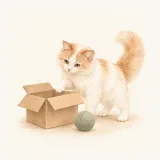
Extroverted cats are the ones who make guests say “wow, I’ve never met a cat like this.” They treat life as a group activity and consider your privacy a charming suggestion.
Common tells:
- They greet visitors at the door. New human? New friend. They’ll be weaving between ankles before the shoes are off.
- They “help” with everything. Typing, cooking, folding laundry, using the bathroom — you have a supervisor now, and the supervisor has opinions.
- They’re vocal. Chirps, trills, meows, and full monologues. They’re not just making noise; they’re keeping the conversation going.
- They seek out company. They’ll follow you room to room and settle wherever the action is, even if the action is you doing dishes.
- They get bored (loudly) when alone. An under-stimulated extrovert will invent chaos to fill the gap.
Sound familiar? You may be sharing your home with the sunny, people-loving spirit of The Playful Explorer (ENFP): curious, expressive, and genuinely delighted by whatever’s happening next.
It’s a Spectrum, Not a Switch
Here’s the part people miss. Very few cats are pure extroverts or pure introverts. Most live somewhere along the line, and where they land is shaped by two big things: temperament and early socialization.
Temperament is the wiring your cat showed up with. Some kittens are bold explorers from week one; others are cautious observers. That baseline is real and largely fixed.
Early socialization is what happened during the sensitive window, roughly two to seven weeks of age. Kittens who met lots of gentle people, sounds, and situations in that window tend to grow into more confident, socially relaxed adults. Kittens who didn’t — feral-born cats, or ones raised in isolation — often lean more solitary, not because they’re antisocial by choice but because the world never got introduced to them properly.
This is why two cats with similar wiring can turn out differently, and why a shy cat can slowly warm up over months of patient, pressure-free trust-building. Personality is durable, but it isn’t a locked box. If you’re curious about how these behavioral patterns get measured rather than guessed at, our methodology page walks through how the four dimensions are scored.
One more nuance: cats can be selectively social. An introvert might be a chatty extrovert with you and a ghost with everyone else. Context matters, so watch the pattern across many situations rather than judging by one dinner party.
Making an Introverted Cat Comfortable
The golden rule for introverts: give them control and let them come to you. Nothing rebuilds an introvert’s trust faster than realizing they get to set the pace.
- Provide safe retreats. High perches, covered beds, a quiet room, a cardboard box in a low-traffic corner. A cat who can escape usually feels safe enough not to need to.
- Respect the hideout. When your cat is in their spot, that’s a closed door. Don’t drag them out to say hi to guests — that’s the fastest way to teach them that hiding doesn’t even work.
- Brief your visitors. “Ignore the cat” is the kindest instruction you can give a guest. Let your cat approach on curiosity, not obligation.
- Keep routines predictable. Consistent feeding times and calm energy lower the ambient stress that introverts feel most acutely.
- Let affection be their idea. Sit nearby, do your own thing, and let them close the gap. When they do, you’ll know it counted.
Making an Extroverted Cat Comfortable
For extroverts, the golden rule flips: prevent boredom and loneliness. An extrovert with nothing to do is a problem-solving machine pointed at your houseplants.
- Invest in enrichment. Puzzle feeders, window perches with a bird view, rotating toys, and a few minutes of interactive wand play twice a day. Give the social energy somewhere productive to go.
- Consider company. Many extroverts genuinely thrive with a compatible feline companion — someone to wrestle, chase, and co-supervise the household. (Introverts, notably, often do not want this. Know your cat first.)
- Talk back. If your cat chatters, answer. Extroverts light up at responsive interaction, and the back-and-forth strengthens your bond.
- Build in together-time. Structured play or training sessions satisfy the craving for connection far better than passively leaving the TV on.
- Watch for lonely signals. Excessive vocalizing, destructiveness, or velcro-clinginess can mean your social butterfly needs more engagement, not less attention.
So, Which One Is Yours?
Spend a week just watching. Notice what your cat does when the doorbell rings, whether they seek the crowd or the quiet corner, and how they recharge after something exciting. The pattern usually reveals itself quickly once you know what you’re looking at.
And remember that the introvert/extrovert axis is only one of four dimensions in a full personality picture — how your cat takes in the world, makes decisions, and structures their day all layer on top. If you want the complete portrait instead of a hunch, take the PurrJung test or start with the friendly overview at What Cat Am I?. Your cat has been telling you who they are this whole time. This is just you finally reading the manual.
Cat types in this article
Meet your cat's personality type
Take the free 16-question PurrJung test — about 3 minutes to discover which of the 16 feline types your cat is.
Take the Free Test