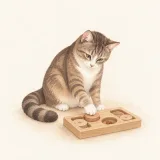
Company & curiosity
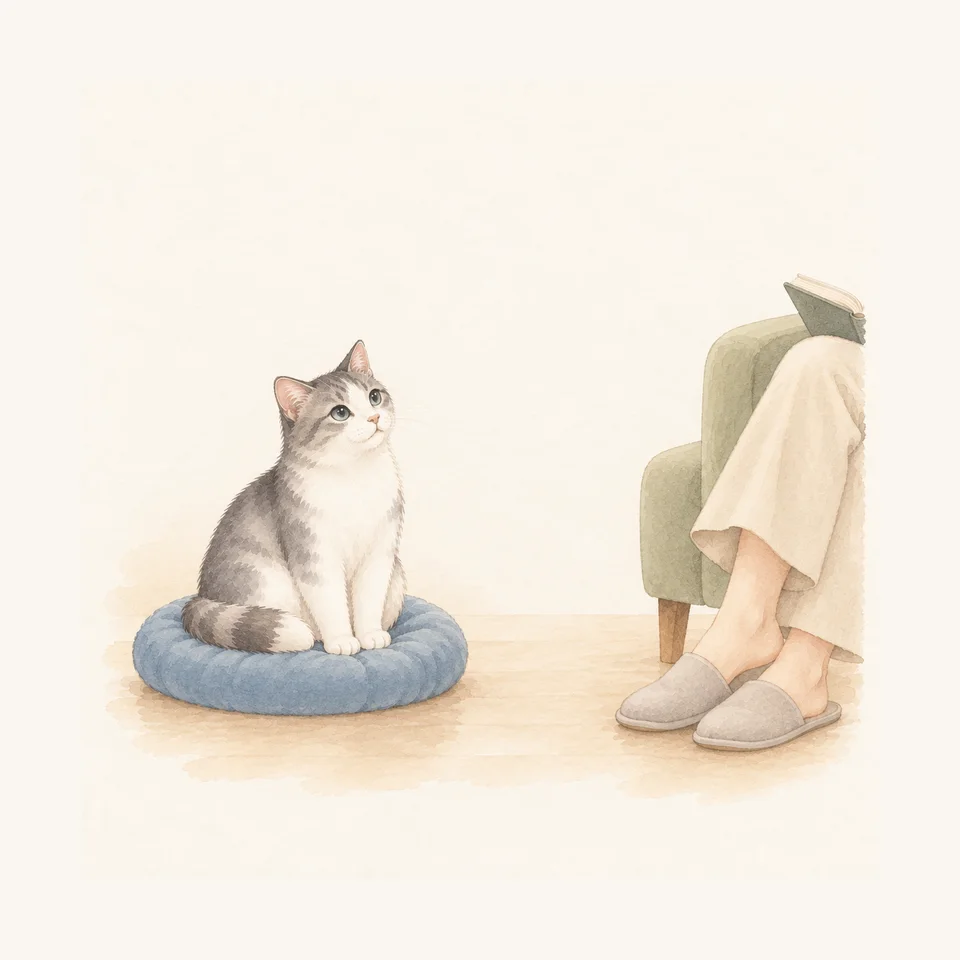
- Where does your cat choose to observe quietly?
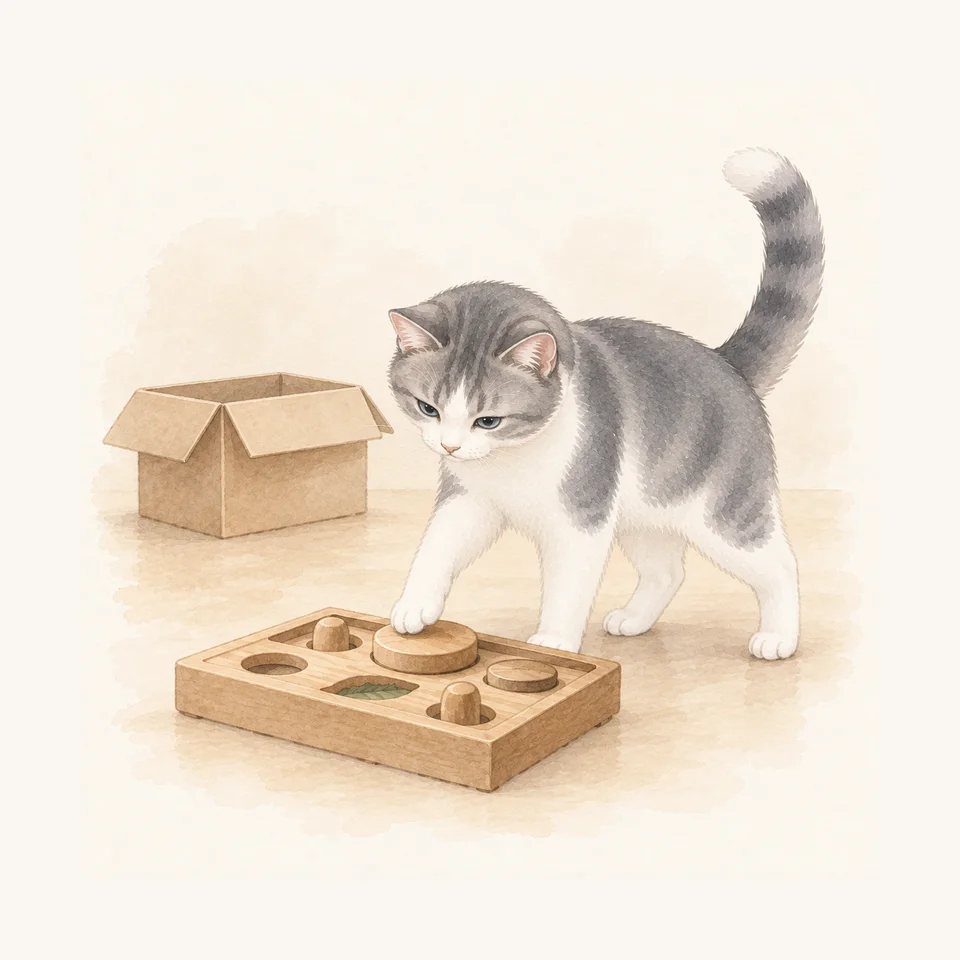
- How do they approach a new toy or space?
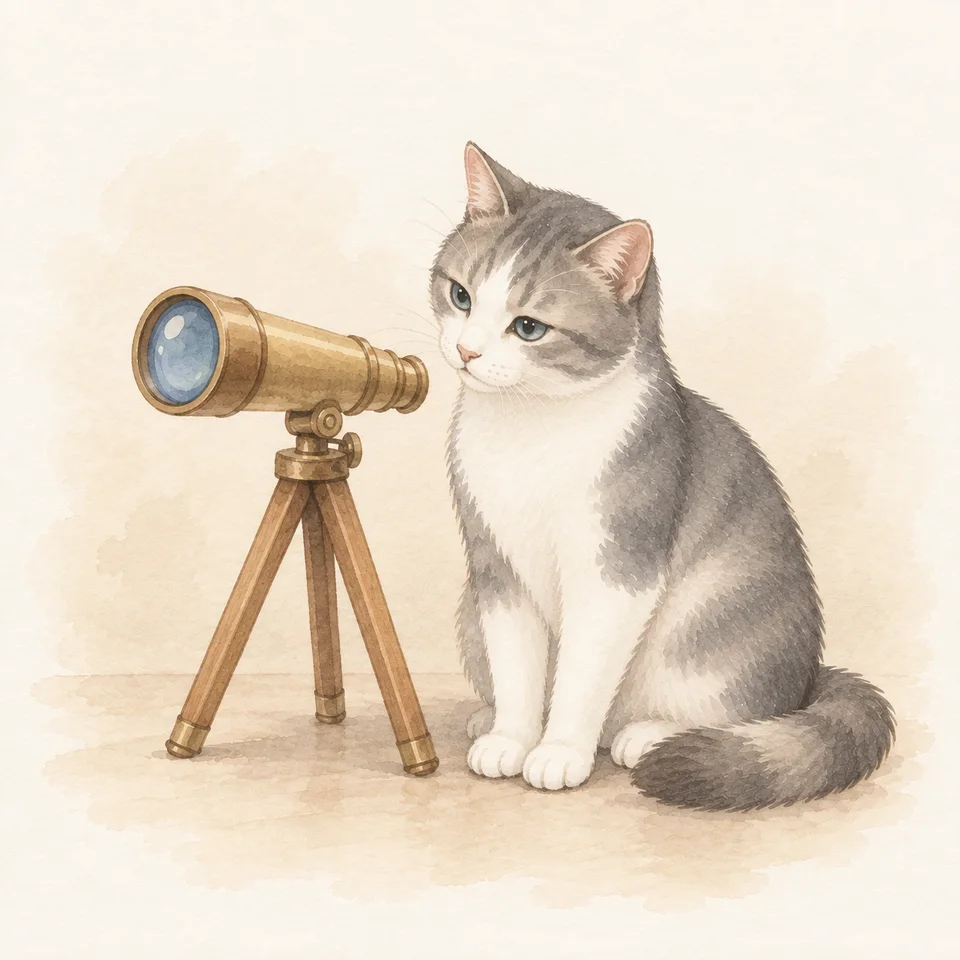
Prefers quiet · Tries new things · Keeps some space · Regular hours
Usually watches the house from a high, quiet spot. When something new appears, it comes down to sniff it and circle it once, then goes back to its usual place. Meals and naps happen at about the same times, and it rarely needs someone right beside it.
Everyday scenes
Four watercolor scenes from an imagined day, with a few questions to ask about your own cat. A real cat may choose differently from one day to the next.
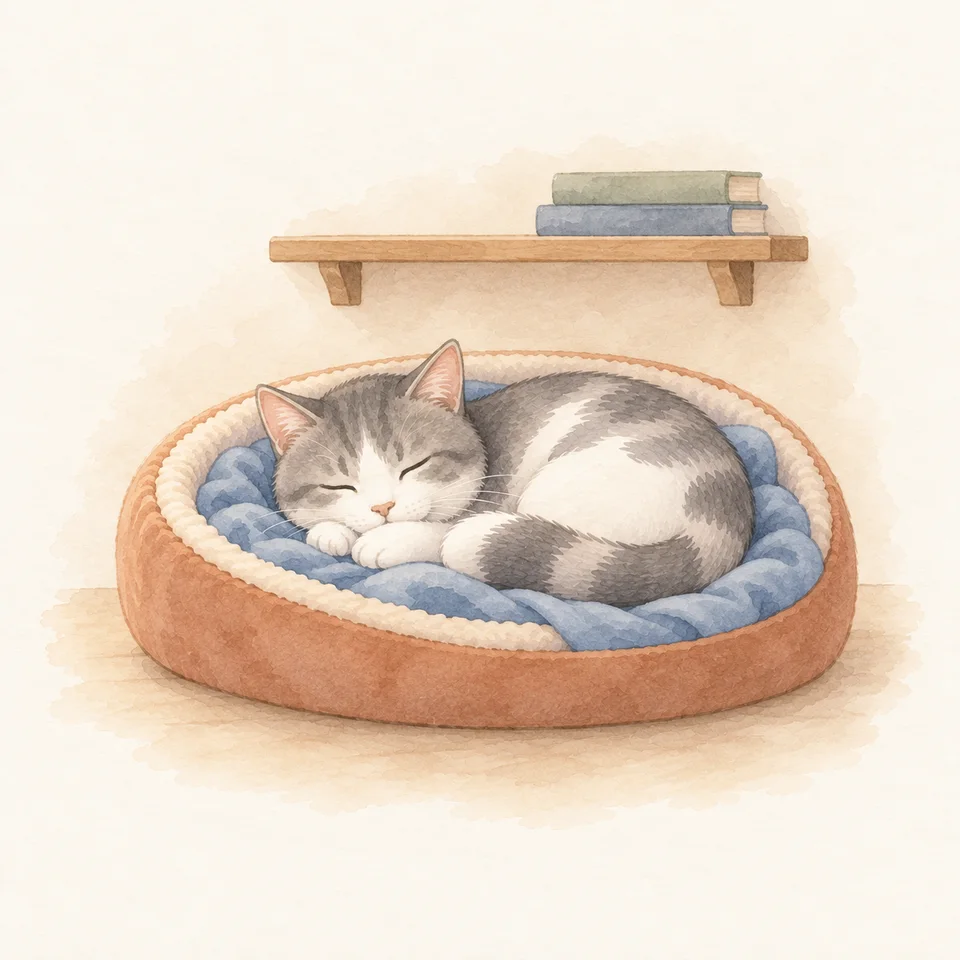
Give it one high, quiet place with a view of the room: a shelf or a window perch away from the doorway. Keep its bed under the bookshelf where it is, and set new things down at floor level so it can come down and inspect them when it chooses.
Whatever the type, every cat needs food, water, a litter box, safe rest and play within easy reach. Adjust the home to this cat and to the cats already living there; a type cannot decide whether cats should live together.
Watching from a shelf can look like a lack of interest in the household. It is the opposite: watching is how this cat takes part. Sitting on its own cushion a step away during your reading hour is its way of keeping you company.
This cat keeps to itself, so it gives few signals when something is wrong. If it comes down for meals later than usual, or stops coming to sniff what is new, compare with its last few weeks. Keep the yearly checkup even when nothing looks different, because some conditions begin quietly.
A change from this cat’s usual pattern is a reason to check the body first. Note what changed and when it started, and ask your veterinarian instead of putting it down to the type.
Each of these types differs from INTJ on one dimension.
This compares type descriptions for fun. How two cats actually get along depends on each cat and their home.
View comparisonsJust for fun. The questions draw on cat behavior research, but the quiz itself has not been scientifically validated and cannot diagnose anything.