Living well with cats
Enjoy them now.Plan for their whole life.
A cat can live ten years or more. Before bringing one home, think through what they need now and how a move, a new baby or an illness could change things.

01
Before bringing a cat home
Talk through these four things with everyone who will share the responsibility.
Time, every day
Plan who will feed, clean, play and notice changes, including on busy days.
A realistic budget
Price local food, litter and routine vet care. Set aside a plan for unexpected treatment.
A suitable home
Check housing permission and household agreement. Prepare secure windows, a carrier and places to hide and scratch.
The individual cat
Ask an adoption team about the cat’s needs and history. Choose a companion for the life you can offer, beyond a photo or breed label.
Waiting is a responsible choice too. You can help a local rescue through volunteering or supplies while you prepare.
Your before-adoption checklist
Turn the preparation into a few manageable tasks. Tick an item once you have made an arrangement.
Progress is saved in this browser across languages. Come back whenever you need; this is a planning aid, not an adoption assessment.
Source · Cats Protection · English resource
02
Everyday care
Food, water and a clean toilet
Provide suitable complete cat food, fresh water and accessible litter boxes. Clean them regularly and notice changes in eating or toileting.
Places to hide, scratch and play
Offer resting and hiding places, scratching surfaces and gentle play. Let your cat approach and leave; give each cat access to separate resources.
A veterinary care plan
Discuss checkups, vaccinations, parasite prevention and neutering with your vet. Seek veterinary advice for illness, injury or unexpected changes.
A safe home and an identity
Reduce escape and household hazards. Discuss identification such as a microchip with your vet, and keep registered contact details current.
03
Plan ahead for life changes
Travel and busy weeks
Agree on a reliable caregiver, access to the home and written care instructions before you leave.
Moving or family changes
Include your cat in housing and travel plans early. Keep familiar routines and allow time to adjust.
Aging and emergencies
Review care as needs change. Keep a carrier, vet contacts, medical records and a backup caregiver ready.
04
Asking for help is part of caring
If money, housing or behavior becomes difficult, talk with your vet or an animal-welfare organization early to work out a plan.
- Speak to your vet about health or behavior changes, and ask local welfare groups what support is available.
- Explore a trusted temporary caregiver or supported rehoming if keeping your cat is no longer possible.
- Arrange a confirmed handover and share medical records, habits and needs. Keep providing safe care until the handover.
Never abandon a cat outdoors or leave them at a rescue without an arrangement. Ask the organization directly about capacity and urgent options. Source:[4]
Get to know the cat beside you
Noticing how your cat eats, plays and rests helps you learn what it prefers. PurrJung’s playful types do not assess adoption readiness or replace veterinary advice.
Back to the homepageShare this with someone thinking about a cat
Share the topic or download an illustrated reminder for someone thinking about a cat.
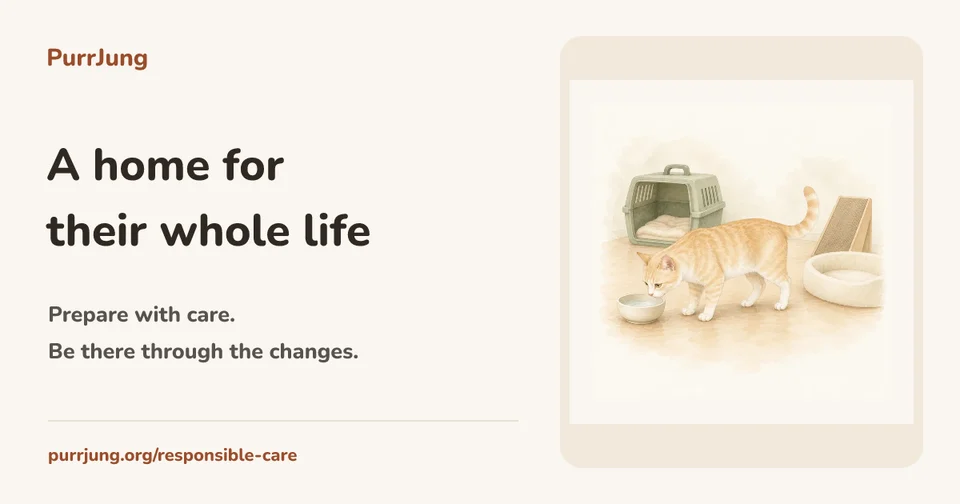
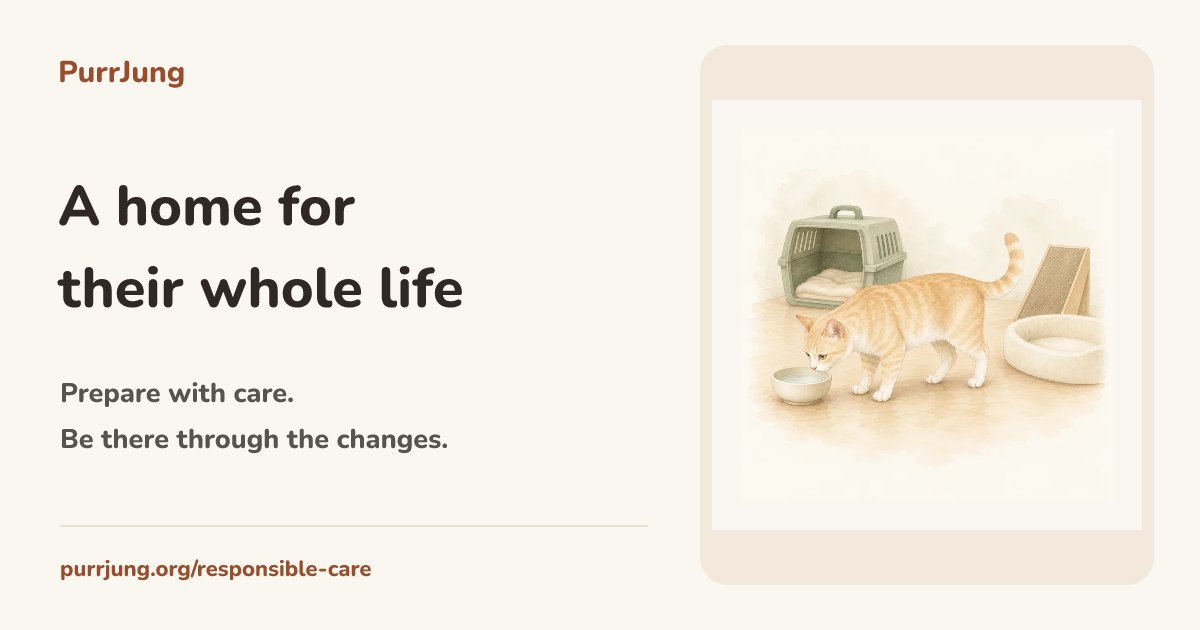
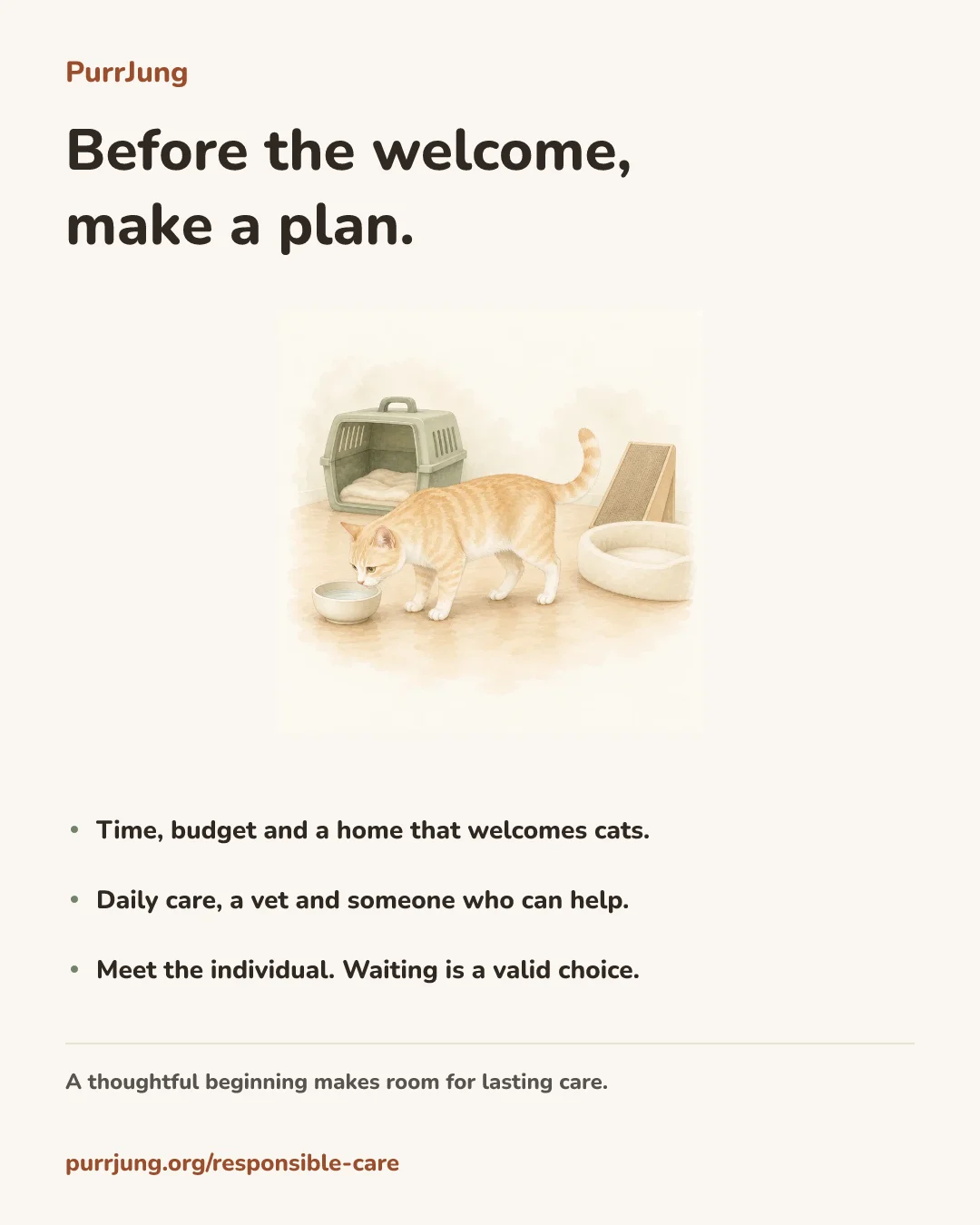
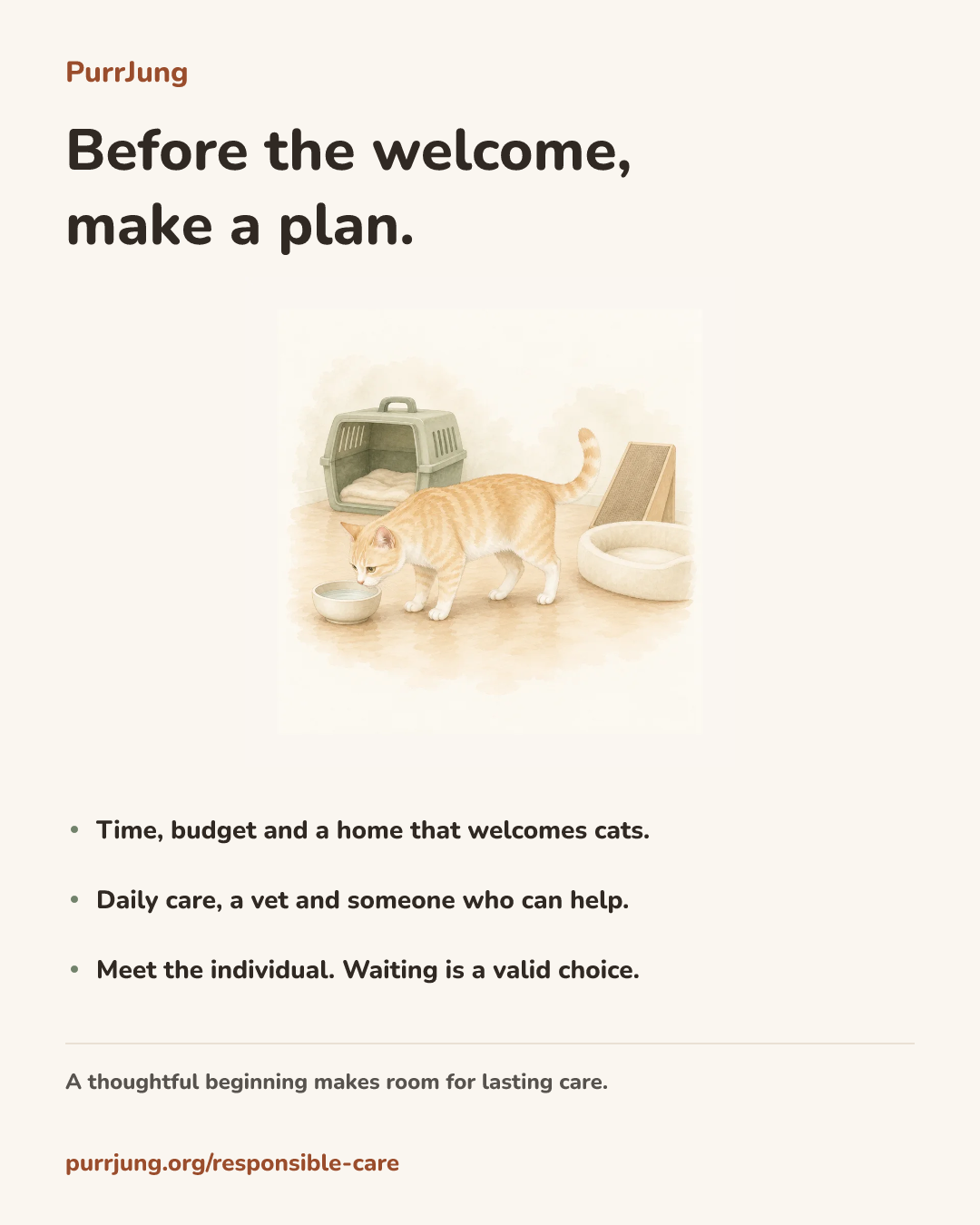
Think before adoption
What to sort out before bringing a cat home.
- Time, budget and a home that welcomes cats.
- Daily care, a vet and someone who can help.
- Meet the individual. Waiting is a valid choice.
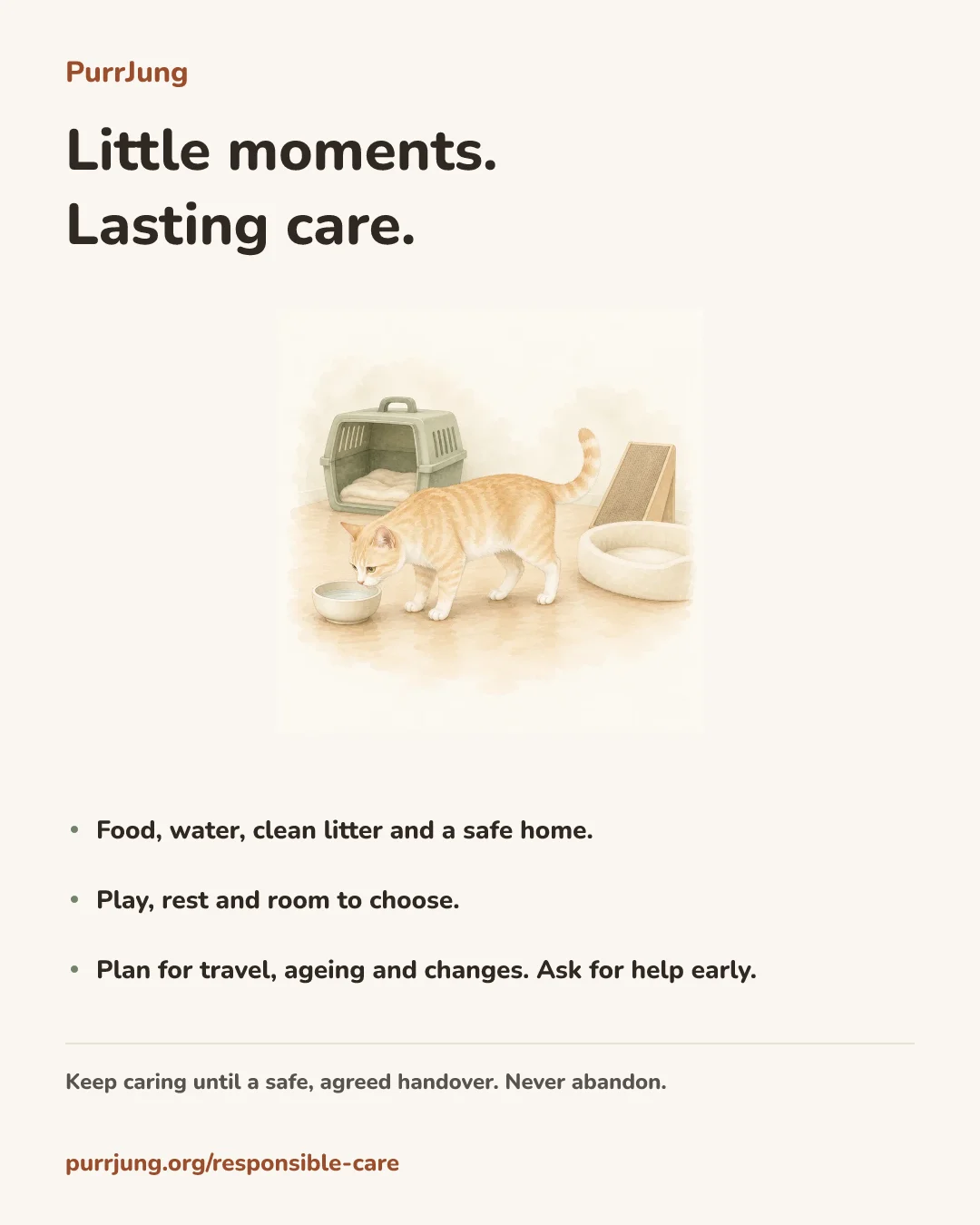
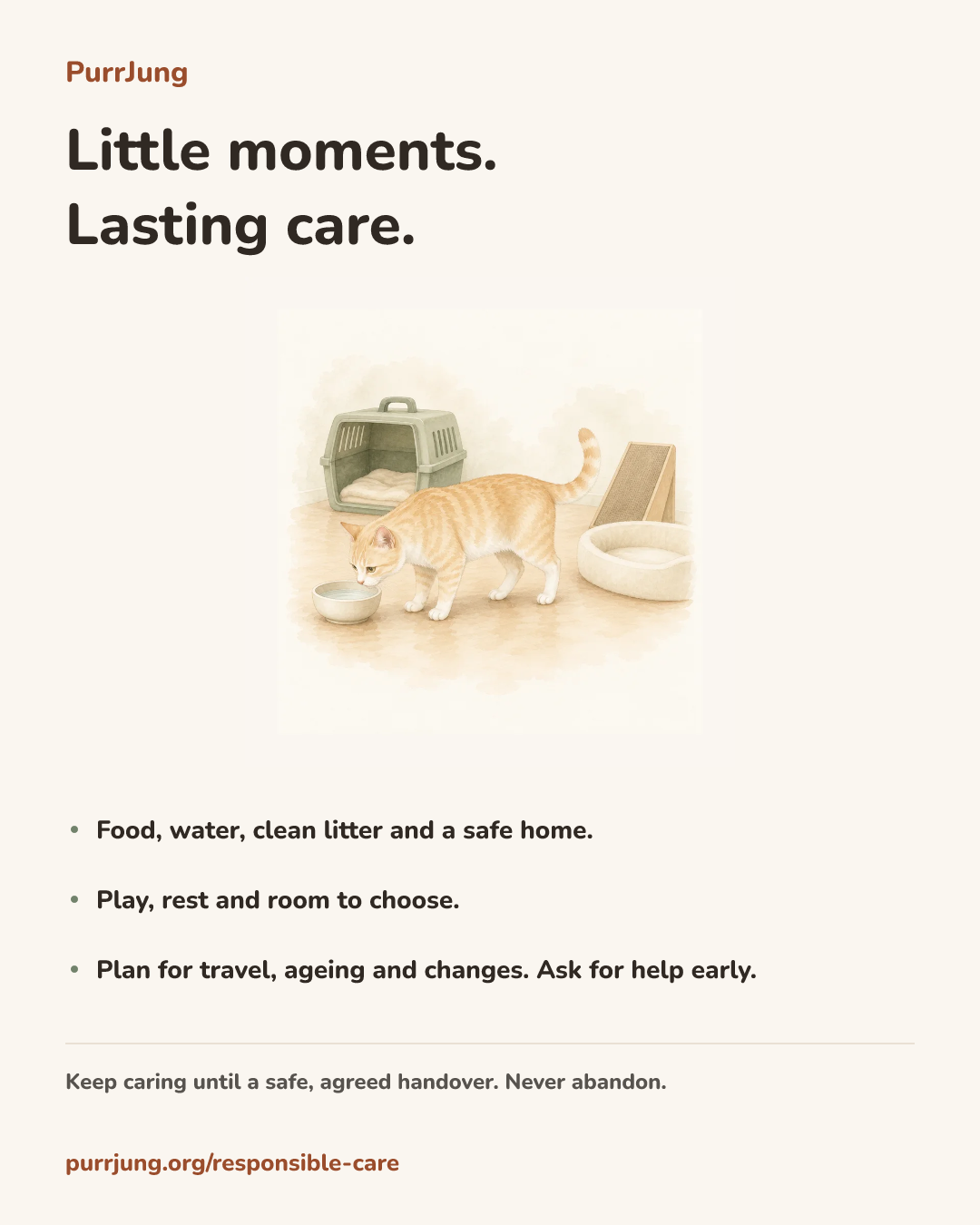
Care every day
The daily basics, and planning for change.
- Food, water, clean litter and a safe home.
- Play, rest and room to choose.
- Plan for travel, ageing and changes. Ask for help early.
Sources for taking the next step
These English resources inform the guide. Services and requirements vary by location; contact a local vet or welfare organization for support near you.
- Cats ProtectionChoosing the Right Cat For You
Choosing a cat and preparing a home · English resource
- ASPCAGeneral Cat Care
Food, hygiene, health and identification · English resource
- FelineVMAClient Education: What Your Cat Needs to Feel Secure
A cat’s environmental needs · English resource
- Cats ProtectionThinking About Giving Up A Cat
Support and careful rehoming · English resource
- ASPCAA Closer Look at Community Cats
Community cats and TNR · English resource
Sources checked ·