Community cats & TNR
Community cats:how to help.
The cat you pass on your way home may already have someone feeding and looking after it. Learn how TNR works, then coordinate with local caregivers before stepping in.

Trap, neuter, return, then keep caring.
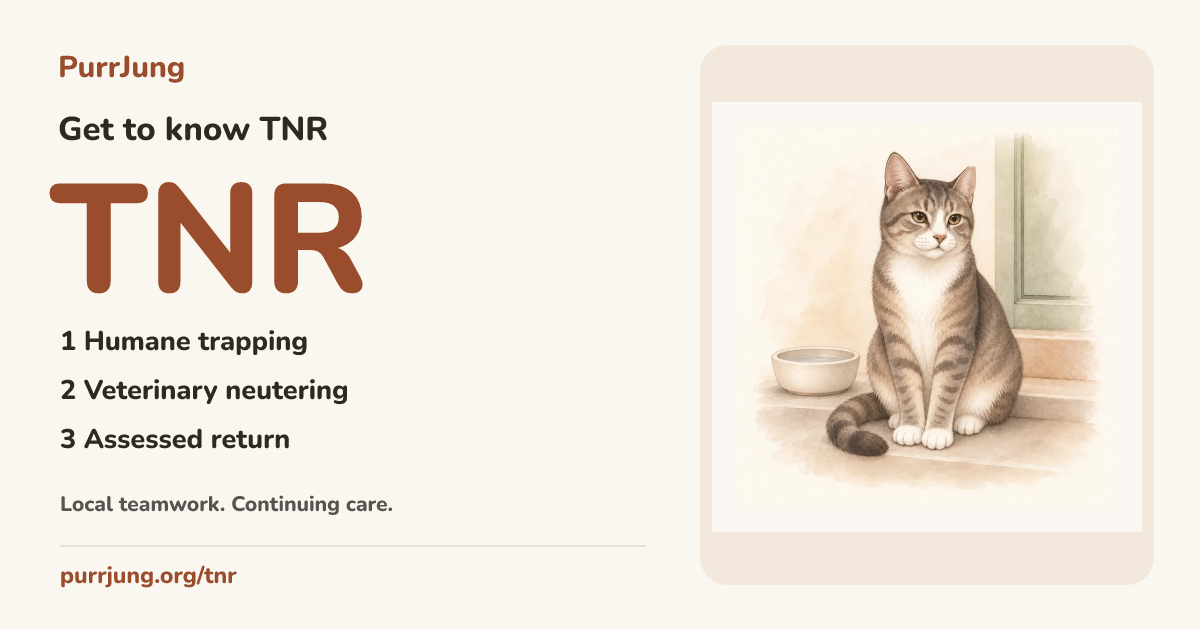
TNR stands for Trap–Neuter–Return. It is a coordinated approach to managing unowned outdoor cats, with veterinary care and follow-up at its heart. Sources: [1]
Humane trapping
An experienced team plans the capture, veterinary appointment and transport before trapping begins.
Veterinary neutering
A veterinarian assesses the cat, performs spay/neuter surgery and plans appropriate vaccination and identification.
Assessed return
After recovery and veterinary clearance, suitable cats return to their original location when it is safe and permitted.
Keep checking in after the return.
Continuing care includes clean feeding areas, monitoring wellbeing and arranging help for newcomers. You may see this called TNRM: the M stands for monitoring. Sources: [2]
TNR
A flat ear tip usually means the cat has been neutered.
A deliberately flat ear tip commonly identifies a cat who has been neutered. A veterinarian makes this mark under anesthesia, usually during the same procedure, to help avoid unnecessary repeat trapping. Sources: [3]
Marking practices vary. An ear mark alone cannot confirm a cat's health or ownership; ask the local team if you are unsure.
The right plan depends on the cat and the place.
TNR is part of community cat care. Returning a cat requires an individual decision, alongside these other needs.
A home may already exist
An outdoor cat may be a lost or roaming pet. Check with neighbors and arrange an identification check through a vet or rescue. Reuniting with an owner or suitable adoption may be the right path.
Sources: [7][2]Some cats need another kind of help
Illness, injury and very young kittens need prompt advice from a vet or rescue. Decisions about treatment, foster care and return depend on the individual cat.
Sources: [6][2]Wildlife and neighbors matter too
Ecologically sensitive sites and unsafe locations need a different plan with local authorities and specialists. Local rules, wildlife protection and residents' concerns belong in the discussion.
Sources: [2][5]Where you can start.
You can contribute without handling a cat. Start with what you can reliably offer and what the local team actually needs.
I've noticed cats nearby
Observe from a comfortable distance. Ask whether someone already cares for them, and whether an owner is looking for a missing cat. Share what you notice with a local rescue or veterinary team.
I'd like to lend a hand
Ask an established group about transport, supplies, record keeping or support for veterinary costs. Agree on a manageable role; consistent small contributions are useful too.
I'd like to help organize
Work with experienced handlers and a clinic. Confirm appointments, transport, supervised recovery and the plan for each cat before trapping. Agree who will continue care and monitor new arrivals.
Begin locally: contact an animal welfare organization, community cat group or veterinary clinic. Ask about service area, training, costs and aftercare. The sources below are reading resources, not a worldwide clinic directory. Sources: [1][2][7]
Common questions.
What does “community cat” mean?
Here it means an unowned cat living outdoors. It describes a living situation, not a personality type. Some are comfortable around people; others keep their distance.
Sources: [1]I've found kittens. Should I take them away?
Their mother may be nearby. Avoid assuming they are orphaned. If they appear ill, injured or in immediate danger, contact a vet or rescue promptly; otherwise seek advice before separating them.
Sources: [6]Can a cat be returned somewhere else?
Return normally means the original location. Moving a cat to an unfamiliar place is a separate, demanding process that needs specialist planning. If the original site is unsafe, involve a local team.
Sources: [2]Does TNR resolve the wildlife issue?
Share with neighbors and friends
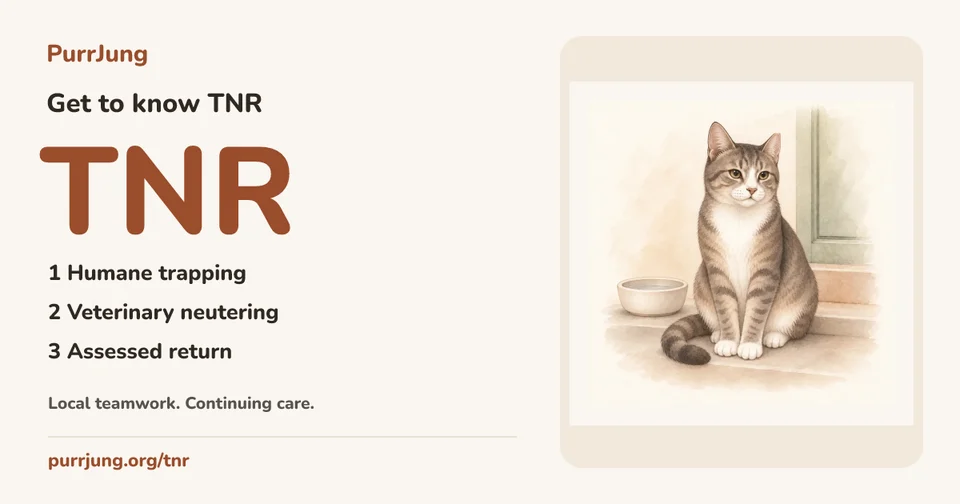
Copy the topic link or download the TNR card to send to a neighbor or friend.
Sources and further reading.
These are external resources, with their own regional context and policies. We explain both the approach and its limits; listing an organization does not imply a partnership or endorsement.
- ASPCAA Closer Look at Community Cats
United States · introduction · English
- ASPCAPosition Statement on Community Cats
United States · program planning · English
- Cats ProtectionA missing ear tip is a sign of a neutered feral cat
United Kingdom · identification · English
- RSPCA AustraliaWhat are trap-neuter-return programs in cat management?
Australia · context and limitations · English
- ASPCAI Found Kittens Outside, What Do I Do?
United States · kittens · English
- Cats ProtectionStray Cat Advice: What to Do If You Find a Stray Cat
United Kingdom · found cats · English
Sources checked ·
Prepared by PurrJung for public education. For a particular cat, follow the advice of the treating veterinarian and local professionals.