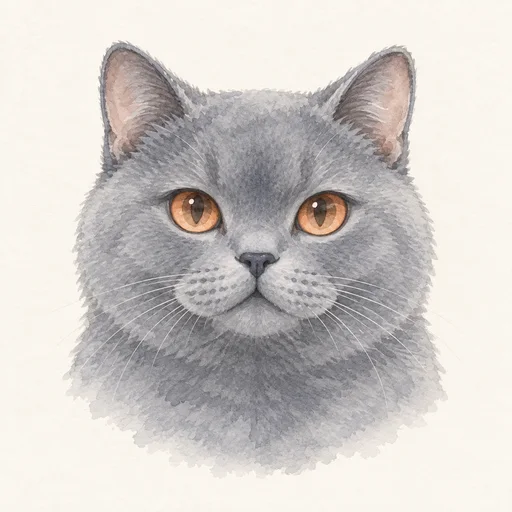
Cat encyclopedia
British Shorthair
A rounded silhouette and a dense, plush short coat.
At a glance
- Entry type
- Cat breed
- Origin / context
- United Kingdom
- Coat
- Short, dense; many colors
Name & background
The British Shorthair developed from British domestic cats through selective breeding in the nineteenth century. Blue is a familiar variety, but the breed has many other colors.
[1]British Shorthair personality: observe the individual
Can breed predict personality?
A British Shorthair’s breed name does not tell you whether they will seek company or enjoy being held. Cats Protection notes that cats differ even within a breed: genetics, early socialization and past experience all help shape personality. Ask a familiar caregiver for examples rather than treating “calm” or “affectionate” as a promise.
[2]Let the cat choose contact
Sit quietly and let your cat approach. Being close is not automatically a request for petting or being picked up. If they initiate contact and look relaxed, International Cat Care recommends a gentle stroke to the cheeks, chin or head for about three seconds, then a pause. Continue only if they seek more; stop if they tense up or move away.
[3]Notice where they rest
When you sit down, does your cat settle nearby or choose another spot? Let them keep that choice. Do not reach into a hiding place or wake a resting cat to test how sociable they are. Note the setting and compare similar moments on other days; these observations describe this cat, not a fixed British Shorthair temperament.
[3]Three everyday scenes
See this cat in three scenes
Each illustrated cat appears in three scenes: exploring, playing and resting. This directory includes breeds as well as coat colors and patterns; illustrations do not predict personality, and a real cat’s preferences show up in daily life.
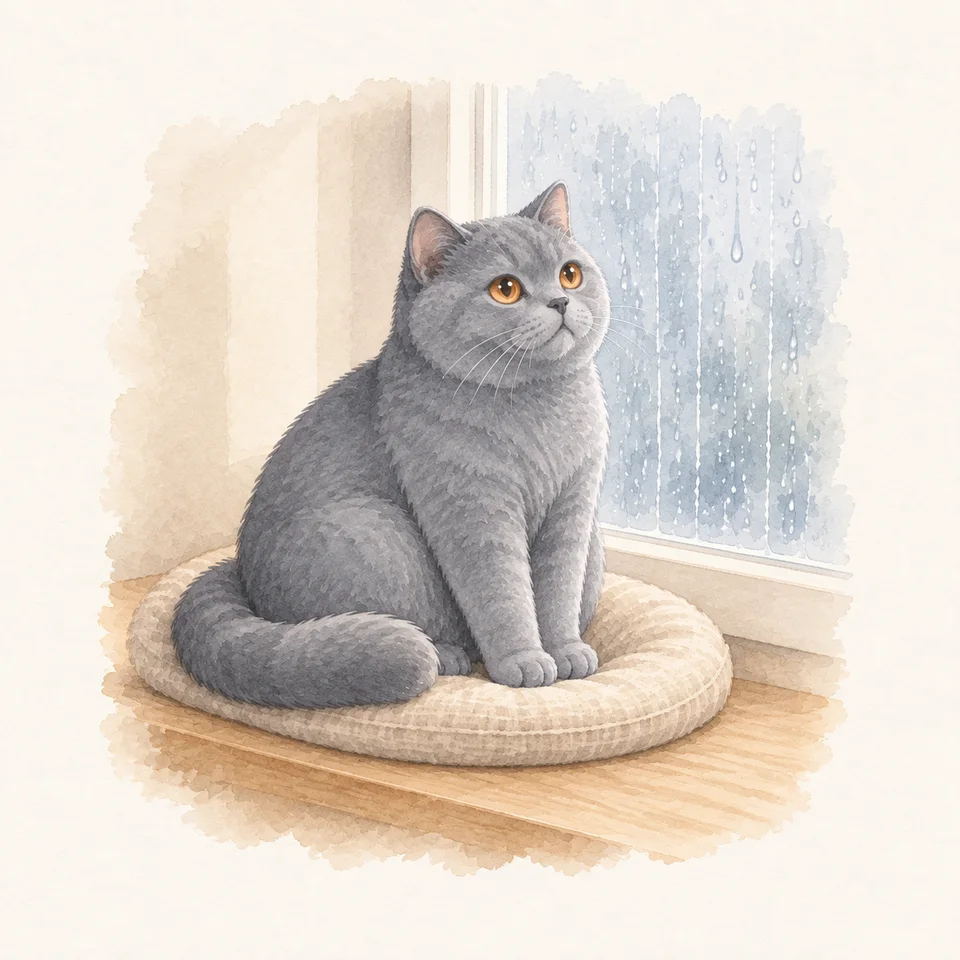
Recognizing the look
A broad, rounded face, sturdy body and plush coat help describe the look. A blue-gray coat by itself does not establish the breed.
[1]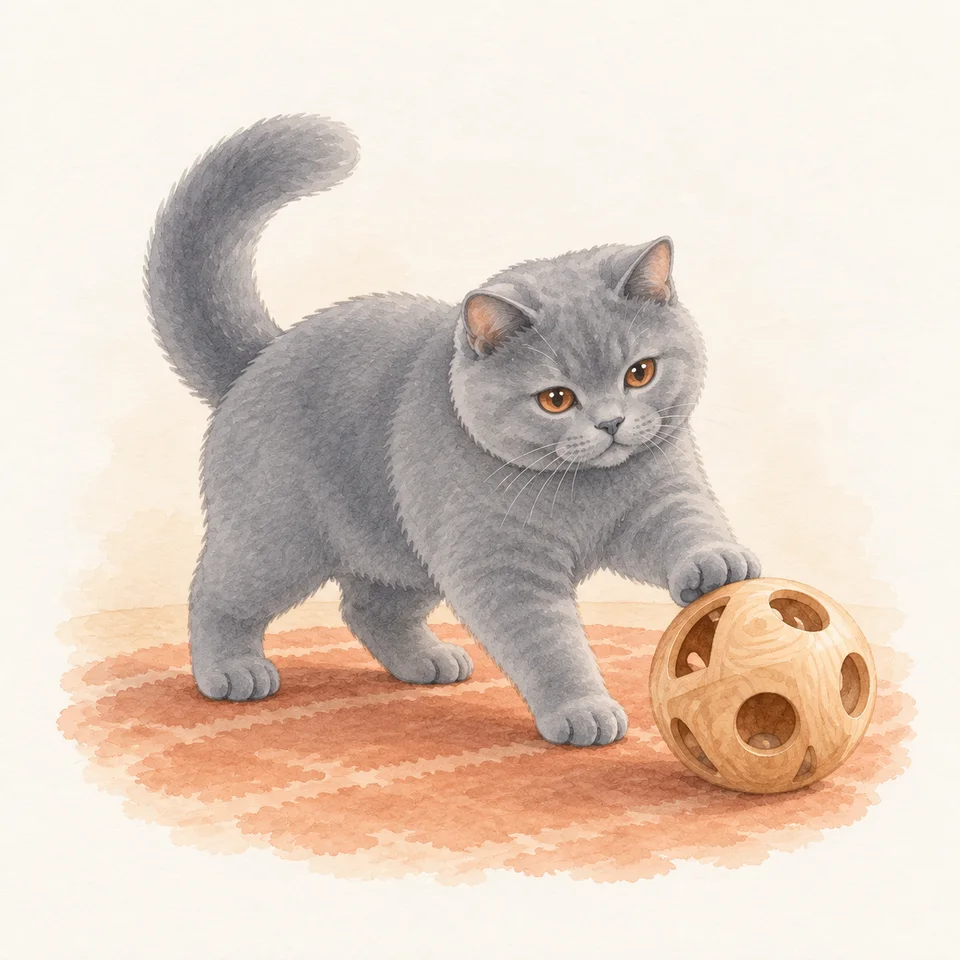
Watch how this cat plays
- Does your cat go straight toward a new toy, or watch for a while first?
- Which part catches their interest: chasing, touching, or peeking from a hiding spot?
- When the game ends, do they stay nearby or choose a quiet place of their own?
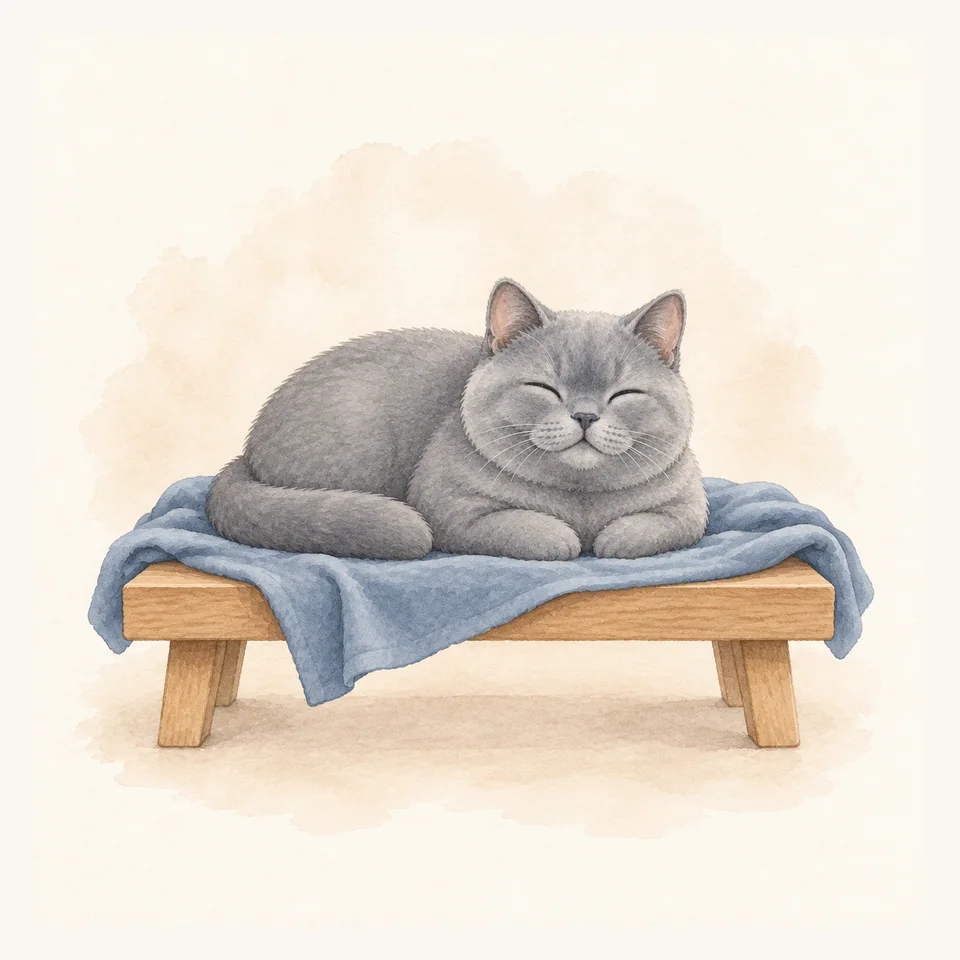
What to notice at home
After play, notice which resting place your cat chooses. It may walk over, settle nearby, or go somewhere quiet on its own.
These facts describe breeds and appearances. Each cat’s preferences are best learned through everyday observation.
Get to know the cat in front of you
See where it rests, what distance it keeps and how it likes to play. A breed or coat label cannot tell you that.
Sources & further reading
Sources checked ·
The encyclopedia summaries are adapted and translated from the Wikipedia articles below, with contributors listed in their histories. These summaries are shared under CC BY-SA 4.0.
This text license does not cover the illustrations or website code.
Sources for the observation & care notes
These original educational notes are separate from the Wikipedia summaries above. The sources support the cited sections; they do not imply endorsement or veterinary review of this page. The notes do not replace individual veterinary advice.
- Choosing the Right Cat For You
Cats Protection · English source
- Cat Friendly Interaction
International Cat Care · English source
Sources checked ·