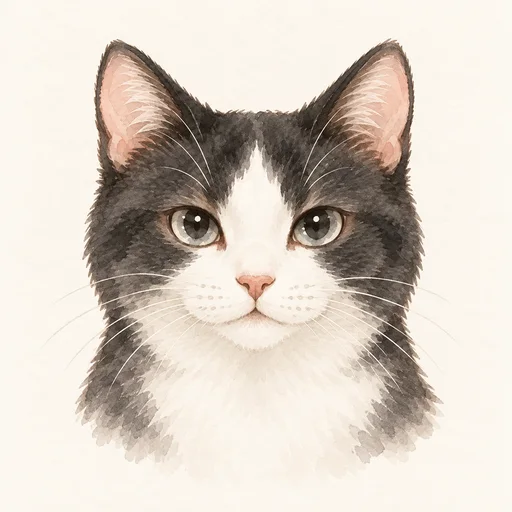
Cat encyclopedia
Tuxedo
Tuxedo describes a coat pattern, not a breed: a dark body with a white chest or paws. Explore the markings and everyday care ideas, without assuming personality from color.
At a glance
- Entry type
- Coat pattern
- Origin / context
- Found across cat populations
- Coat
- Black with areas of white
Name & background
Bicolor cats have white fur alongside another color. “Tuxedo” usually describes a darker coat with a white chest or paws; cow-like patches are another bicolor arrangement.
[1]Tuxedo cat personality: more than the markings
Is there one tuxedo cat temperament?
A tuxedo is a coat pattern, not a separate breed. The white chest and paws do not tell you whether a cat likes visitors, touch, or another cat’s company. Black-and-white cats are individuals, just like cats with other coats. Descriptions such as clever, cheeky, or always friendly are not a reliable assessment of the cat in front of you, and markings cannot predict a successful introduction.
[2]Try a greeting the cat can choose
Sit quietly and leave a clear route away. Notice whether the cat approaches, stays beside you without touching, or returns to a hiding place. If they seek petting, keep it brief and pause; stop if they tense up or move away. Enjoying company is not the same as enjoying being picked up. Offer separate resting places and play opportunities that fit this cat’s choices, rather than a supposed tuxedo personality.
[3]Three everyday scenes
See this cat in three scenes
Each illustrated cat appears in three scenes: exploring, playing and resting. This directory includes breeds as well as coat colors and patterns; illustrations do not predict personality, and a real cat’s preferences show up in daily life.

Recognizing the look
Notice where the white areas begin and end. A tuxedo pattern and larger black patches on a white body are related looks, not identical markings.
[1]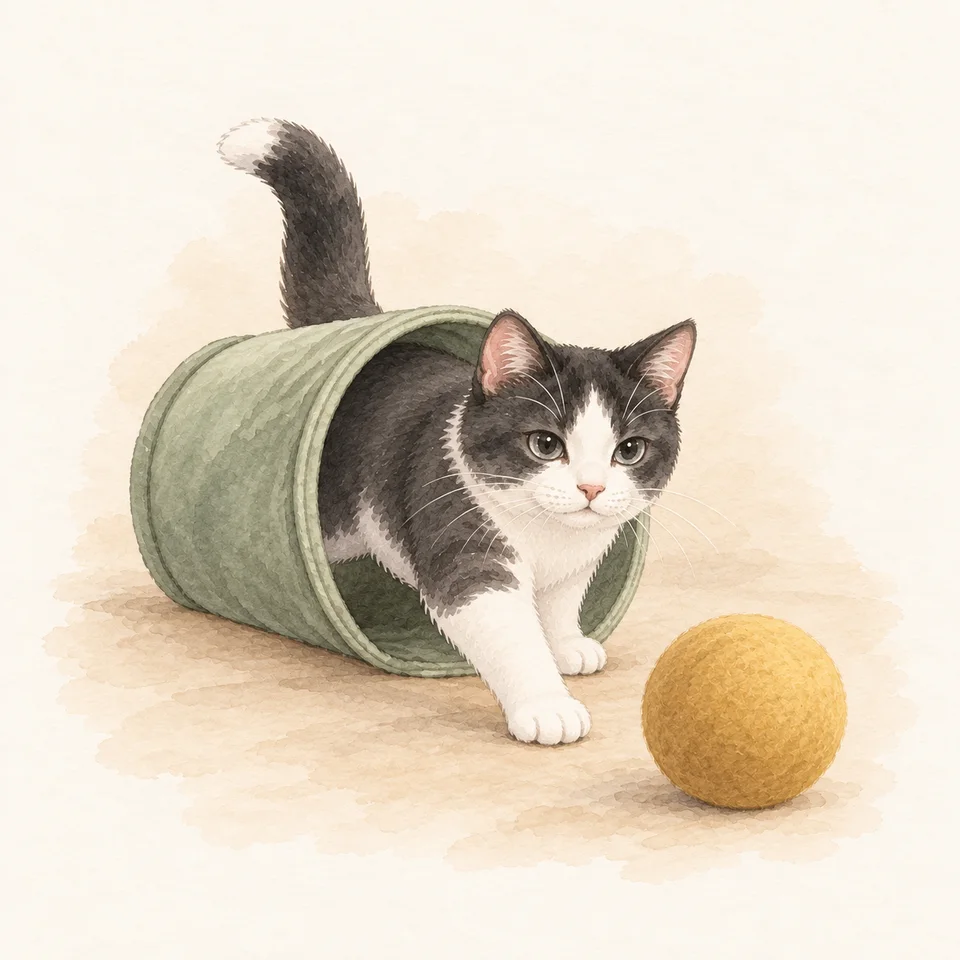
Watch how this cat plays
- Does your cat go straight toward a new toy, or watch for a while first?
- Which part catches their interest: chasing, touching, or peeking from a hiding spot?
- When the game ends, do they stay nearby or choose a quiet place of their own?
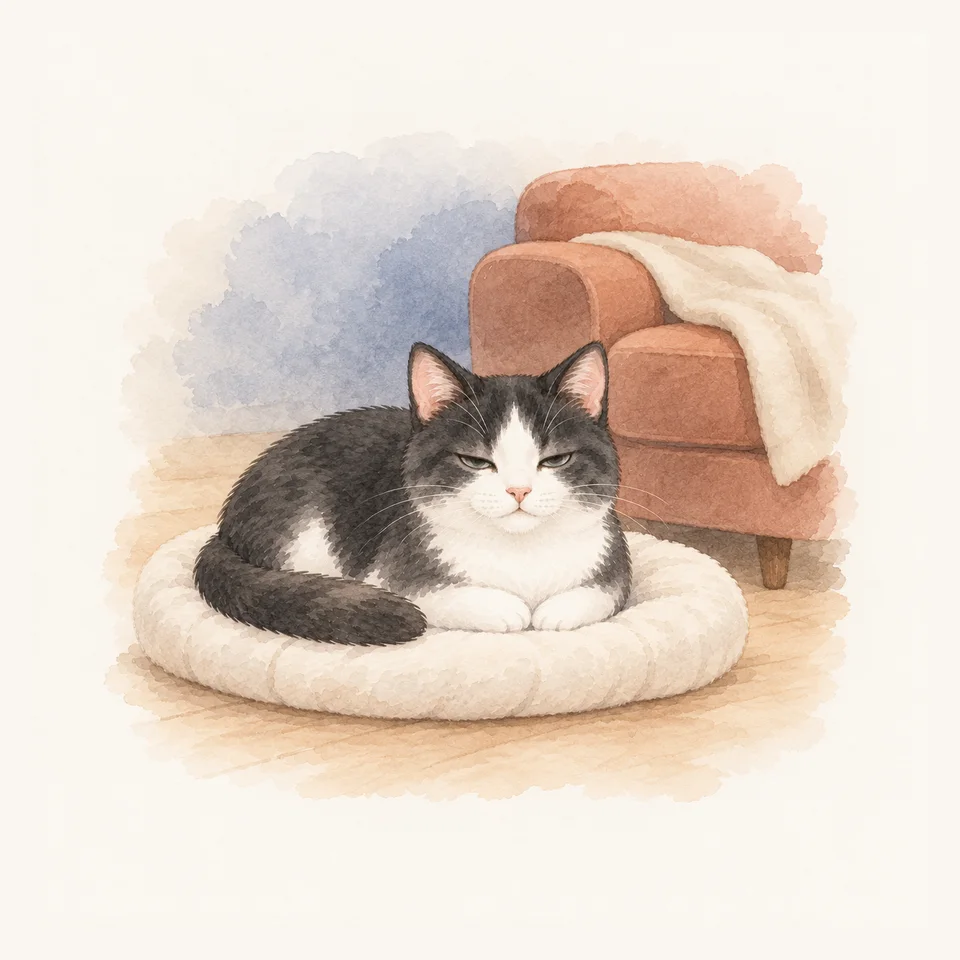
What to notice at home
After play, notice which resting place your cat chooses. It may walk over, settle nearby, or go somewhere quiet on its own.
These facts describe breeds and appearances. Each cat’s preferences are best learned through everyday observation.
Get to know the cat in front of you
See where it rests, what distance it keeps and how it likes to play. A breed or coat label cannot tell you that.
Sources & further reading
Sources checked ·
The encyclopedia summaries are adapted and translated from the Wikipedia articles below, with contributors listed in their histories. These summaries are shared under CC BY-SA 4.0.
This text license does not cover the illustrations or website code.
Sources for the observation & care notes
These original educational notes are separate from the Wikipedia summaries above. The sources support the cited sections; they do not imply endorsement or veterinary review of this page. The notes do not replace individual veterinary advice.
- Black cats — October 2016 survey
Cats Protection · English source
- Client Education: What Your Cat Needs to Feel Secure
FelineVMA · English source
Sources checked ·