Cat encyclopedia
Exotic Shorthair
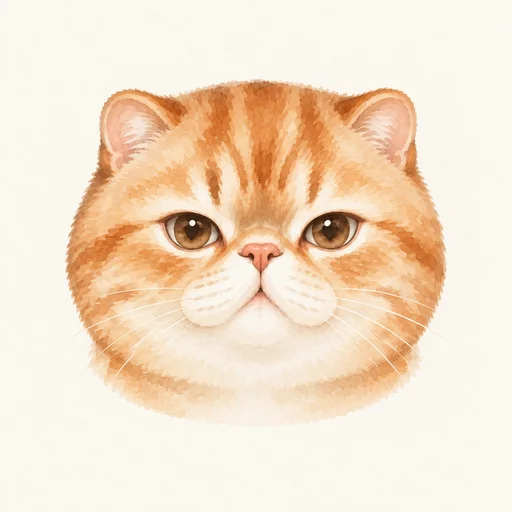
The Exotic Shorthair has a rounded head, compact body and short, dense coat. Learn about its Persian background and find ideas for observing play and rest at home.
At a glance
- Entry type
- Cat breed
- Origin / context
- United States
- Coat
- Short, dense and plush
Name & background
The Exotic Shorthair developed from breeding involving Persians and American Shorthairs. It was recognized by the Cat Fanciers’ Association as a separate breed in 1966.
[1]Exotic Shorthair: names, coat and care
Exotic, Persian, or “Garfield cat”?
This profile uses Exotic Shorthair for the breed sometimes nicknamed “Garfield cat”; the nickname is not a separate breed or a requirement for an orange coat. CFA calls the breed Exotic. Its Persian ancestry helps explain the rounded head and compact body, while the short-haired coat is dense rather than the Persian’s long coat. A similar face alone does not establish a cat’s pedigree.
[2]Does short fur mean no grooming?
A short coat still needs care. The Exotic’s thick undercoat benefits from regular gentle combing to remove loose hair. Keep sessions short and let the cat take breaks; adjust care to the actual coat and ask for help with tangles that pull or hurt. “Easier than a Persian” should not become a promise of effortless care or a reason to overlook changes in grooming habits.
[2]Look at the eyes, not just tear stains
In flat-faced cats such as Exotic Shorthairs, tears may not drain normally and the eyelids may not fully protect the eye surface. Ask your veterinary team how to care for the area around the eyes. New or increased discharge, redness, squinting, or an eye held closed needs prompt veterinary attention, not just cosmetic cleaning. Treatment depends on the cause.
[3]Breathing difficulty is not a personality trait
A very flat face can be associated with airway problems; do not dismiss breathing trouble as normal for the breed or as a quiet personality. Open-mouth or visibly labored breathing needs immediate veterinary care. Do not wait to finish an observation test or try to treat it at home. Even without an emergency, discuss changes in comfortable breathing or activity with your vet.
[4][5]Three everyday scenes
See this cat in three scenes
Each illustrated cat appears in three scenes: exploring, playing and resting. This directory includes breeds as well as coat colors and patterns; illustrations do not predict personality, and a real cat’s preferences show up in daily life.
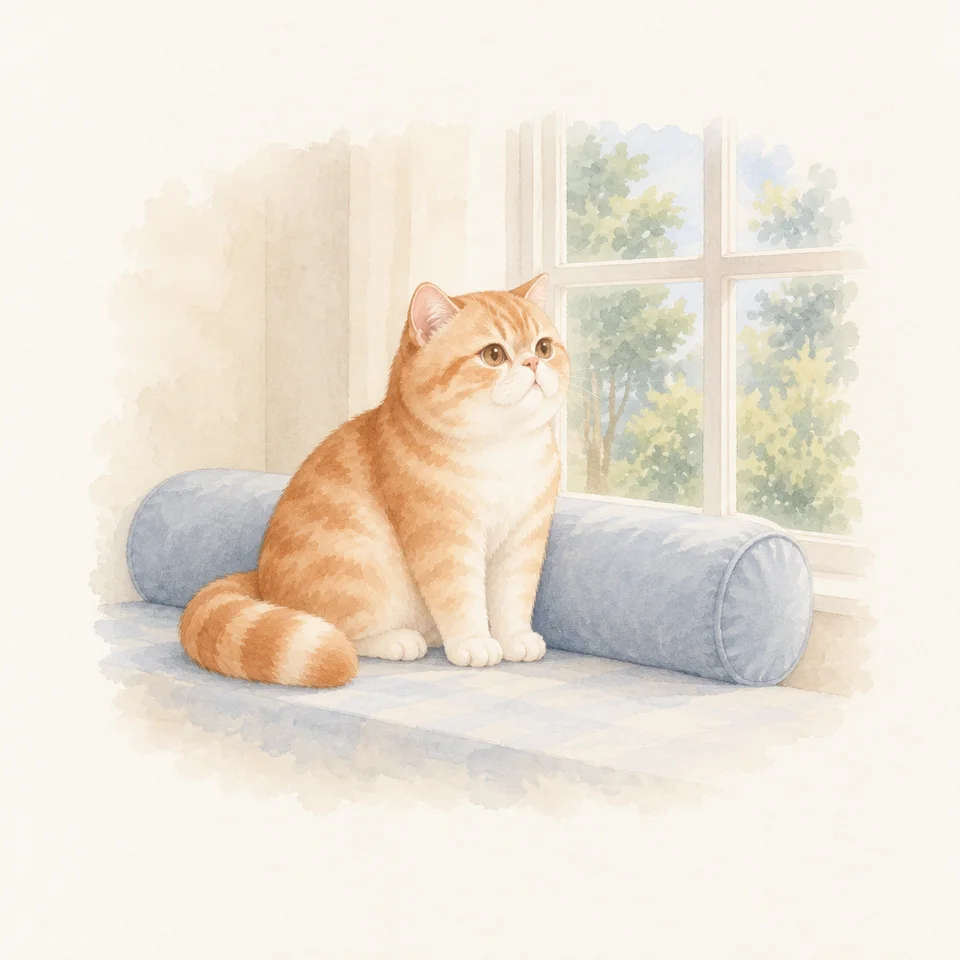
Recognizing the look
Its rounded head and compact body recall the Persian, with a shorter coat. The illustration shows one color among many possibilities.
[1]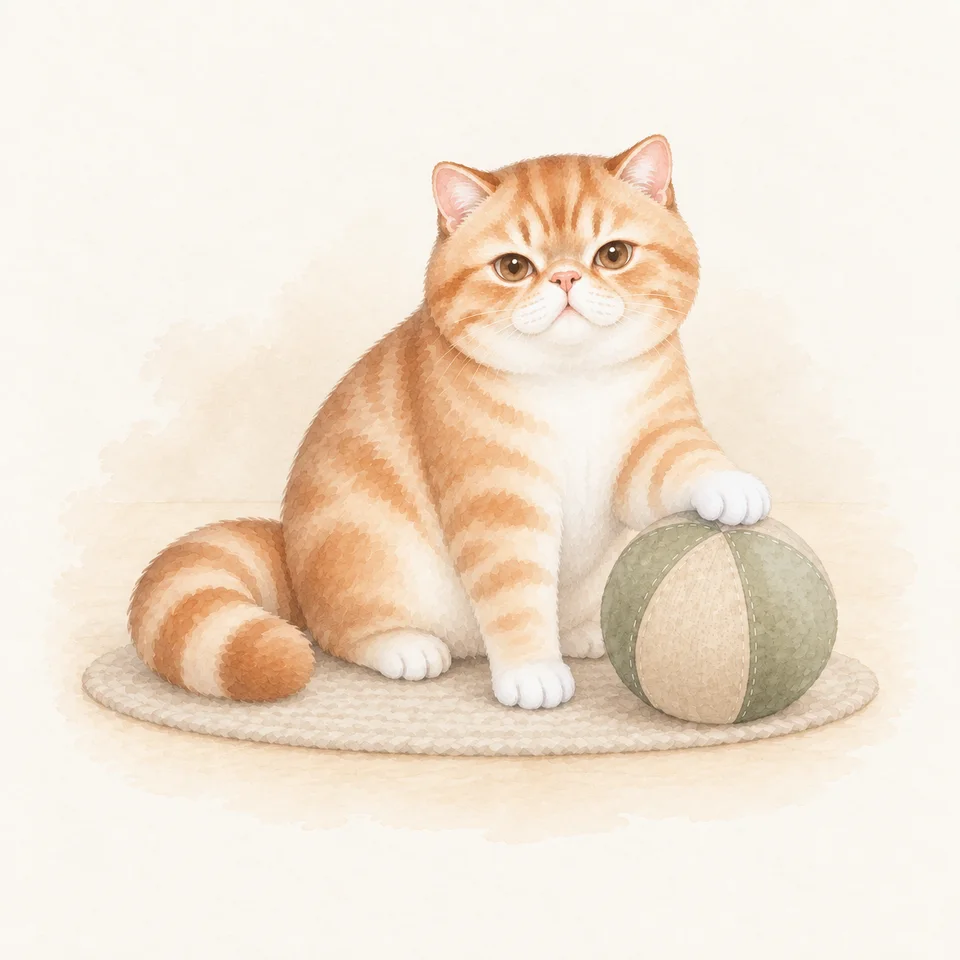
Watch how this cat plays
- Does your cat go straight toward a new toy, or watch for a while first?
- Which part catches their interest: chasing, touching, or peeking from a hiding spot?
- When the game ends, do they stay nearby or choose a quiet place of their own?
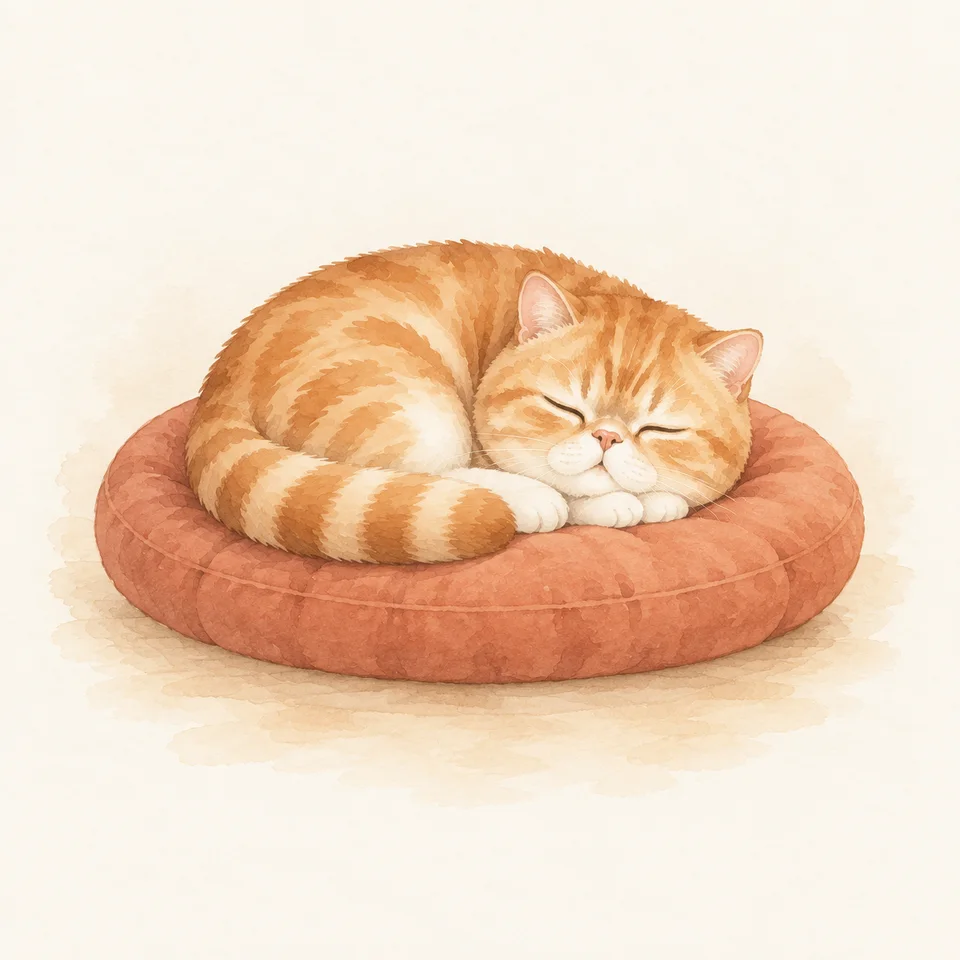
What to notice at home
After play, notice which resting place your cat chooses. It may walk over, settle nearby, or go somewhere quiet on its own.
These facts describe breeds and appearances. Each cat’s preferences are best learned through everyday observation.
Get to know the cat in front of you
See where it rests, what distance it keeps and how it likes to play. A breed or coat label cannot tell you that.
Sources & further reading
Sources checked ·
The encyclopedia summaries are adapted and translated from the Wikipedia articles below, with contributors listed in their histories. These summaries are shared under CC BY-SA 4.0.
This text license does not cover the illustrations or website code.
Sources for the observation & care notes
These original educational notes are separate from the Wikipedia summaries above. The sources support the cited sections; they do not imply endorsement or veterinary review of this page. The notes do not replace individual veterinary advice.
- Exotic
Cat Fanciers’ Association · English source
- Runny Eyes
International Cat Care · English source
- Persian cats and brachycephaly
International Cat Care · English source
- Dyspnea (Difficulty Breathing)
Cornell Feline Health Center · English source
Sources checked ·