Reading Cat Body Language: A Practical Everyday Guide
Everyday behavior 5 min read Updated
In this article
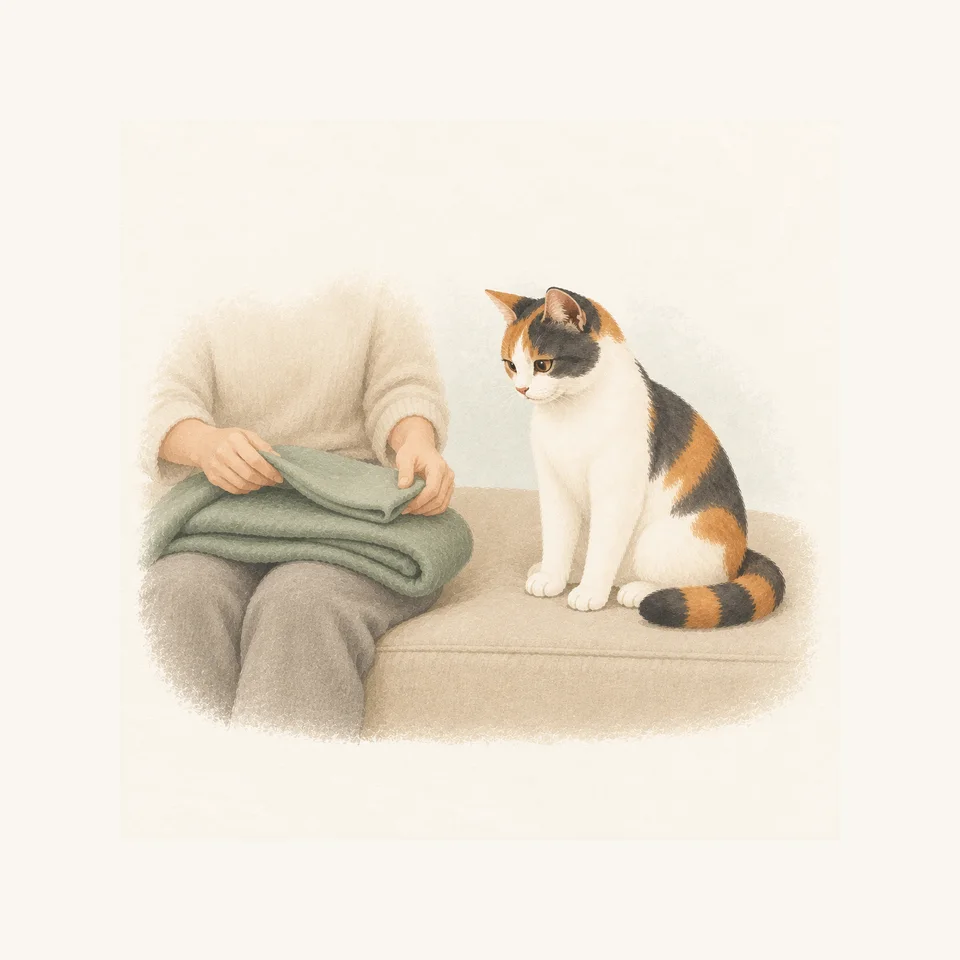
Picture a quiet evening on the sofa. Your cat hops up beside you, settles onto the cushion, and starts gently flicking the tip of their tail while their ears rotate slightly toward the hallway. Is this an invitation for chin scratches, mild curiosity about a distant sound, or the early edge of wanting personal space? Moments like this happen dozens of times a week in any cat household, and the clearest answers rarely come from a single body part alone. Learning to read the whole cat turns daily living into a calmer, more respectful conversation.
Read Signals Together, Not in Isolation
Domestic cats evolved as both solitary hunters and small prey animals, so much of their communication is quiet, economical, and designed to prevent unnecessary conflict. Rather than broadcasting one dramatic gesture, a cat layers small visual cues across the face, ears, tail, and torso at the same time.
Before reaching out to pet or pick up your cat, pause for two seconds and scan both the whole body and the immediate environment. A cat with dilated pupils in a dim room right before dinner is simply tracking movement in low light; the exact same wide pupils paired with flattened ears, a crouched frame, and a visitor’s dog barking in the doorway point to fear or defensive tension. The AAFP and ISFM Feline Environmental Needs Guidelines emphasize that giving cats predictability and choice reduces everyday stress, and accurate observation is how you know when to offer contact versus space.
Quick Reference: Everyday Cat Body Signals
Use this overview as a starting map when checking in with your cat during play, rest, or social time. Always compare at least two or three rows together.
| Body Part | Relaxed or Curious | Unsure or Overstimulated | Defensive or Tense |
|---|---|---|---|
| Eyes & slow blinks | Soft, almond-shaped eyes; normal pupils for the lighting; occasional slow blinks | Widening pupils; fixed stare or rapid glancing between exits and stimuli | Fully dilated pupils or hard, unblinking gaze locked onto a perceived threat |
| Ears | Upright and facing forward, or swiveling gently toward interesting sounds | Pivoting sideways (“airplane ears”) or twitching back and forth repeatedly | Flattened tightly against the head or angled sharply backward |
| Whiskers | Loose, resting softly at the sides of the muzzle, or fanned slightly forward in curiosity | Pulled slightly back or tense along the cheeks | Pressed flat against the face, or pushed sharply forward in high arousal |
| Tail | Held loosely upright with a gentle curve at the tip, or draped calmly at rest | Rapid tip flicking, low swishing from side to side, or brisk thumping on the floor | Puffed-up fur (“bottle brush”), tucked tightly around the body, or stiffly arched |
| Posture & coat | Loose muscles, stretched limbs, weight evenly balanced, smooth coat | Skin rippling along the back, shifted weight, crouching low while staying alert | Rigid limbs, arched back, tucked belly, piloerection along the spine and tail |
Slow Blinks and Respectful Greetings
Among the simplest ways to communicate calm intent to a cat is a slow blink: softening your gaze, gently narrowing your eyes, closing them briefly, and looking slightly away. In a 2020 study published in Scientific Reports, Humphrey and colleagues tested how domestic cats respond to human eye-narrowing movements. They found that cats were more likely to return slow-blink sequences after their owners slowly blinked at them compared with periods of no interaction, and cats were also more likely to approach an unfamiliar experimenter’s outstretched hand after receiving a slow blink rather than a neutral expression.
In everyday practice, slow blinking works best as an open invitation rather than a demand for touch:
- Approach at their level: Crouch or sit sideways instead of looming directly over your cat.
- Offer a soft blink, then wait: Narrow your eyes for a second or two, glance slightly off to the side, and let your cat decide whether to close the distance.
- Keep petting brief and check in: Offer a few gentle strokes around the cheeks or behind the ears, then pause. If your cat leans back into your hand, continue; if they step away, groom abruptly, or flick their tail, end the interaction calmly.
Everyday Misreadings to Avoid
Even attentive cat caregivers sometimes misinterpret familiar gestures because human social habits map poorly onto feline signals.
- An exposed belly is rarely a rub request: Rolling onto the back usually signals trust and relaxation in a safe space, not an open invitation to scratch the abdomen. Because the belly protects vital organs, touching it can trigger sudden defensive grabbing or kicking. Aim for the cheeks or forehead instead unless your individual cat clearly seeks belly contact.
- Tail movement is not a happy wag: Unlike a dog’s loose, full-body wag, brisk tail swishing in a cat typically reflects rising arousal, concentration during stalking play, or mounting irritation during petting.
- Purring does not always equal comfort: While purring is closely associated with contentment and social bonding, cats also purr when anxious, overwhelmed, or physically uncomfortable. Always check posture and breathing alongside the sound.
When Body-Language Changes Point to Health
Because cats instinctively mask vulnerability, subtle shifts in posture and movement are often the earliest clue that something hurts. Watch for patterns that break from your cat’s personal baseline: a persistently hunched or guarded stance, hesitation before jumping onto favorite furniture, flinching or pulling away when a normally welcome area is touched, sudden withdrawal to closets or under beds, or any episode of open-mouth breathing at rest.
Body-language observation is a valuable daily habit, yet it cannot replace a hands-on medical exam. If tense postures, hiding, or movement changes appear suddenly or last more than a day or two, schedule a prompt checkup with your veterinarian. You can also explore our feline health guide and learn how joint or mobility discomfort affects everyday posture in the skeletal system overview.
Sources & further reading
- AAFP / ISFM (2013) · Feline Environmental Needs GuidelinesSource in English
- Humphrey et al. (2020) · Scientific Reports · The role of cat eye narrowing movements in cat–human communicationSource in English
- Merck Veterinary Manual · Physical Description of CatsSource in English
Every article lists its sources. PurrJung types are for fun and are not a veterinary assessment.
How we write and check content