Cat scratching behavior and solutions: meeting natural needs while protecting furniture
Life together 6 min read Updated
In this article
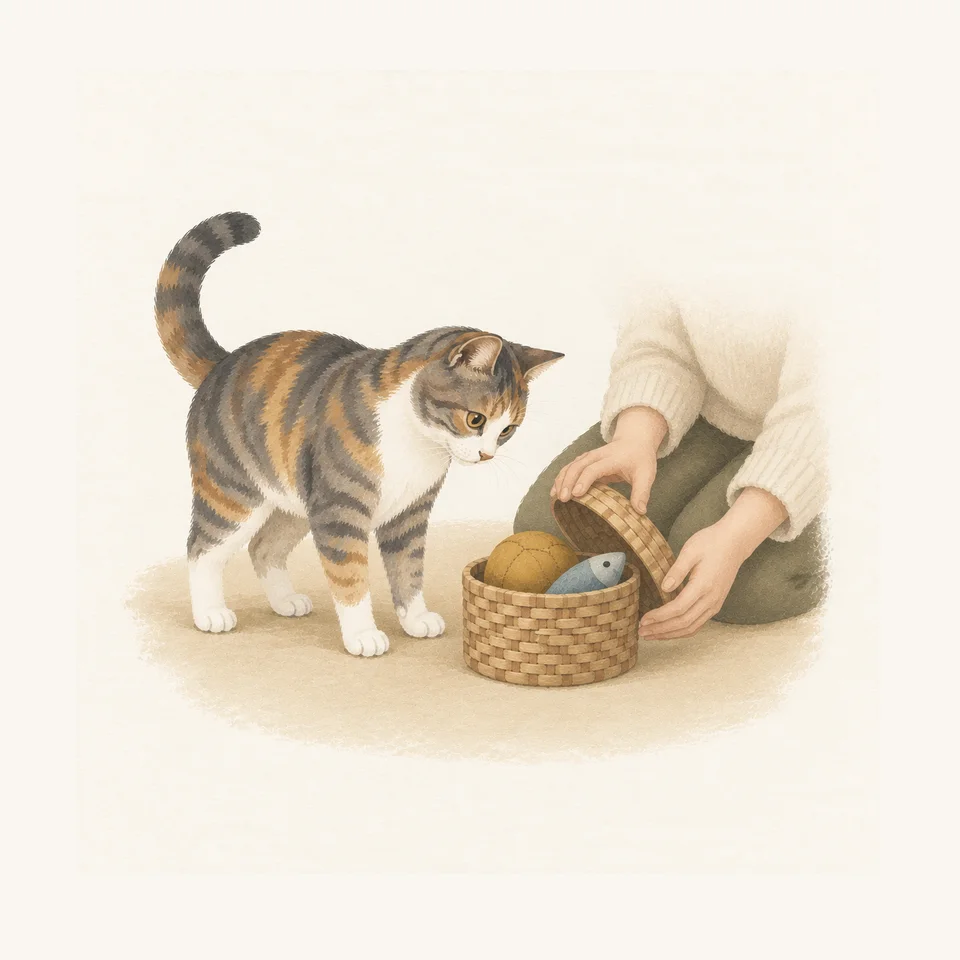
Few everyday habits frustrate cat guardians faster than hearing claws pull across the arm of a favorite sofa. Yet from your cat’s perspective, scratching is never spite or misbehavior—it is an essential daily routine built into feline anatomy and communication. When you give your cat scratchers that match how their body naturally stretches and marks territory, most furniture tension fades without harsh rules or stress.
Why scratching is a normal biological need
Veterinary behavior guidelines from the AAFP, ISFM, and Cornell Feline Health Center emphasize that scratching serves several physical and emotional purposes at once:
- Claw maintenance: Cat claws grow in nested layers. Scratching against firm, slightly fibrous surfaces pulls away loose, translucent outer claw sheaths, revealing smooth, healthy growth underneath and helping prevent nails from snagging or overgrowing.
- Full-body stretching and muscle conditioning: When a cat hooks their claws into a sturdy surface and leans backward, they engage toes, forelimbs, shoulders, and the entire spine in a deep isometric stretch. You can see how closely paw mechanics connect to posture in our cat skeleton overview.
- Visual and scent marking: Cats have tiny interdigital scent glands tucked between their paw pads. Scratching leaves both visible shredded lines and subtle chemical messages that signal familiarity and safety along high-traffic areas of the home.
- Emotional release: Many cats scratch right after waking from a nap, when greeting a returning family member, or during bursts of excitement. Offering safe targets lets that energy land calmly instead of building into frustration.
Matching scratchers to your cat’s habits
Cats rarely accept just any post tucked into a corner. Watch how your cat currently scratches—standing tall on sofa corners, raking flat across rugs, or leaning onto stair risers—and choose surfaces that outperform your furniture.
| Scratcher type | Height, angle, and stability cues | Cat habits it matches best |
|---|---|---|
| Tall vertical sisal post | At least 75–90 cm (30–36 in) tall with a heavy, wide base that stays completely steady under full body weight; woven sisal fabric or tight vertical grain works even better than loose rope. | Cats who stand tall on hind legs for a long shoulder stretch and tend to target sofa arms, upholstered chairs, or doorframes. |
| Horizontal corrugated cardboard pad | Wide, sturdy flat pad heavy enough not to slide on wood or tile—pair with a thin non-slip mat underneath if needed. | Cats who scratch carpets, welcome mats, or flat rugs, as well as kittens and older cats who prefer low-impact traction. |
| Angled ramp or wave scratcher | Solid 30–45 degree incline with a broad, grounded footprint that does not tip when leaned on. | Cats who switch between floor and upright scratching, or stiff-jointed senior cats who want a shoulder stretch without rearing fully upright. |
| Door- or wall-mounted board | Anchored tightly at full-reach chest height so it never bangs, swings, or rattles against the wall during vigorous use. | Compact apartments with limited floor space, or cats drawn specifically to hallway corners, flat walls, and doorway trim. |
Texture matters as much as angle. Many cats favor woven sisal or corrugated cardboard because both offer satisfying shred resistance. Be cautious with carpet-covered posts if your home already has wall-to-wall rugs—similar textures can accidentally blur the line between “mine” and “off-limits.” When a favorite post looks tattered, resist tossing it immediately; cats love the familiar scent and grip of a worn scratcher, so place a new one beside it until the fresh surface is happily adopted.
Placement, redirection, and gentle paw care
Even an expensive post will sit untouched if it is hidden in a laundry room. Because scratching doubles as social communication, location is half the solution:
- Place scratchers along everyday routes: Set a tall, wobble-free post beside favorite sleeping spots for post-nap stretches, near doorways, and directly next to the exact sofa corner your cat already chooses. Once your cat uses the post reliably for several weeks, you can inch it gradually toward a more convenient spot a few centimeters at a time.
- Make the right target inviting: Check every post with a firm push—if it rocks even slightly, most cats will walk away and return to the solid couch. Invite curiosity by dragging a wand toy up the sisal, rubbing in a pinch of catnip or silvervine, and offering quiet praise or a small treat right after scratching.
- Protect furniture without punishment: Yelling, clapping, or using spray bottles rarely stops scratching when you are away; instead, it raises anxiety and can drive more territorial marking. Drape thick, tightly woven throws or fitted covers over sofa arms, or briefly apply smooth furniture shields or pet-safe double-sided tape on the target spot while a better scratcher stands centimeters away.
- Keep claw tips trimmed and days engaging: Trimming only the sharp translucent hook at the very tip every two to four weeks—staying well clear of the pink quick—reduces fabric snags while leaving natural scratching intact. Pairing good scratchers with daily play and vertical choices in our indoor cat enrichment guide also helps ease stress-related scratching.
Why declawing is harmful and where humane boundaries lie
When furniture damage feels overwhelming, some guardians still wonder about declawing (onychectomy). Veterinary organizations including the AVMA clearly explain that declawing is not a permanent nail trim—it is the surgical amputation of the entire distal phalanx, removing the last bone of each toe (comparable to amputating a human finger at the last knuckle).
Research reviewed by the AVMA documents serious welfare risks following declawing: acute surgical pain, potential long-term neuropathic or paw tenderness, and altered weight-bearing that shifts strain onto the remaining joints and back. Cats experiencing sore paws may begin avoiding granular litter in the litter box or turn to biting faster when frightened because their primary tactile defense is gone.
Humane boundaries work with a cat’s biology rather than removing part of their skeleton. Sturdy scratchers placed in prime spots, temporary upholstery barriers, calm positive redirection, routine tip trims, and—when needed for specific household situations such as delicate skin—properly fitted soft vinyl nail caps protect both furniture and trust. You can explore broader humane home practices in our responsible care guide.
Keep in mind
Every cat brings individual preferences to texture, height, and routine. If your cat ignores a new scratcher, view it as useful feedback about wobble, material, or placement rather than stubbornness, and adjust one variable at a time. At the same time, pay attention to sudden changes in paw habits: a cat who abruptly stops scratching, limps or favors a foot, has red or swollen toes, develops thick curving claws pressing into the paw pad (especially common in older cats), or suddenly begins frantic scratching alongside hiding or litter-box changes deserves a prompt veterinary exam. PurrJung offers educational field guides to support everyday observation, not veterinary diagnosis.
Sources & further reading
- AAFP / ISFM · Feline Environmental Needs GuidelinesSource in English
- Cornell Feline Health Center · Destructive ScratchingSource in English
- AVMA · Welfare Implications of Declawing of Domestic CatsSource in English
Every article lists its sources. PurrJung types are for fun and are not a veterinary assessment.
How we write and check content