THE PURRJUNG FIELD GUIDE · FELINE ANATOMY
Small & large intestines
Coiled loops that absorb nourishment and a short C-shaped colon that reclaims water
Sources checked ·
An educational anatomy guide for cat caregivers. It cannot diagnose illness, interpret lab results, or recommend medications or doses; individual care decisions belong with a veterinarian.
Signs that cannot wait- Anatomical terms
- Duodenum, jejunum, ileum & feline colon
- Where it sits
- Mid and lower abdomen behind the stomach and liver, ending in the rectum
- Distinctly feline
- Compared with dogs or plant-eaters, a cat has a notably short intestinal tract tuned for concentrated animal protein and fat—meaning food moves through fairly quickly.
- Everyday job
- Finishes breaking food down, pulls amino acids, fats, vitamins, and water across the gut wall into blood, and shapes tidy formed stools.
Where it sits in the body
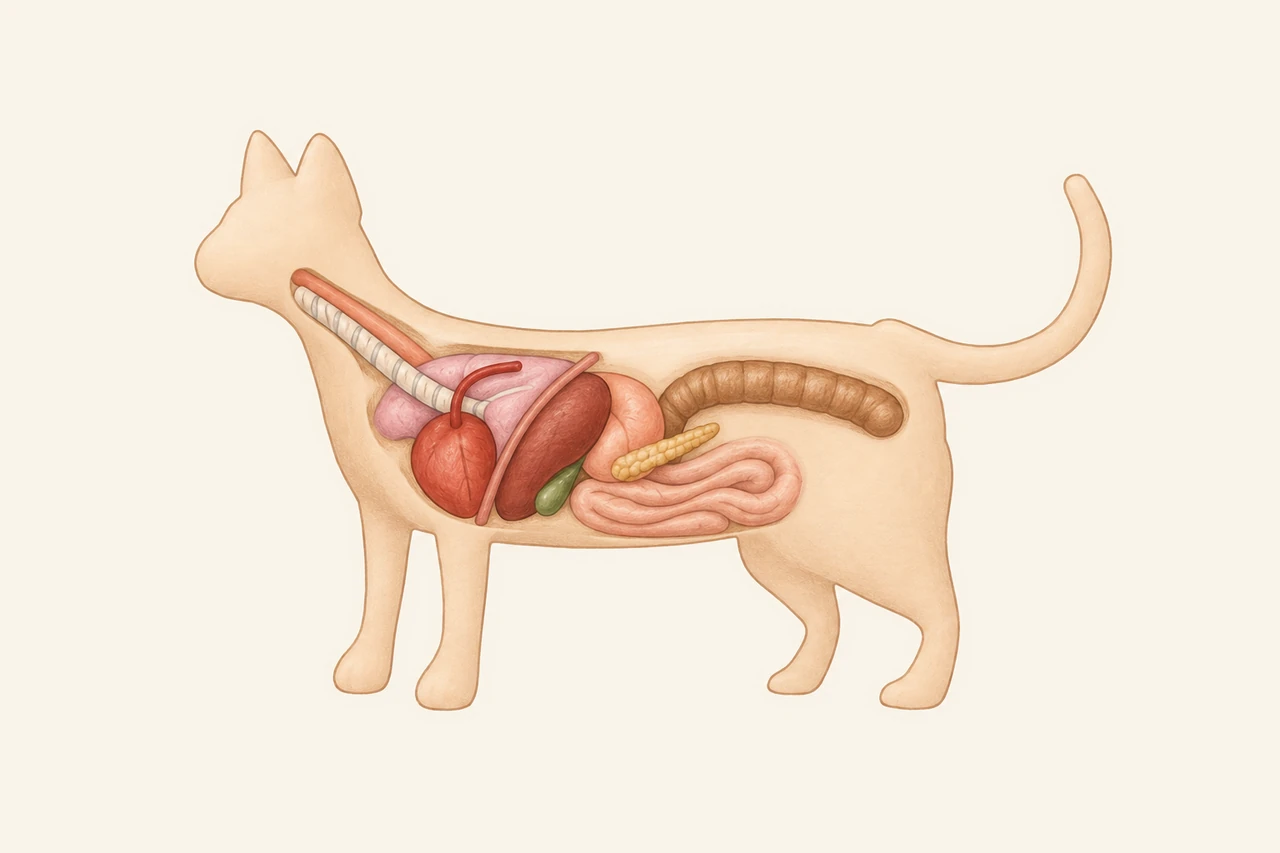
- Esophagus
- Liver
- Gallbladder
- Stomach
- Pancreas
- Small intestine
- Colon
Leaving the stomach, food winds through the coiled loops of the small intestine—duodenum, jejunum, and ileum—which fill the warm middle and lower belly.
Near the right flank it meets the wider, C-shaped colon curving upward beneath the spine and kidneys toward the pelvis to form and store stool until a litter-box visit.
Neighboring organs & parts
What it does every day
- 01
Absorbing building blocks across velvety folds
Millions of tiny finger-like villi line the small intestine, soaking up protein fragments, essential fats, vitamins, and taurine into the bloodstream and lymph.
- 02
Reclaiming water and electrolytes
As leftovers reach the colon, its lining absorbs water back into the body—a vital conservation step inherited from desert-dwelling ancestors.
- 03
Housing helpful gut microbes
Balanced communities of microbes along the intestines aid gut barrier health, produce helpful fatty acids, and keep stool texture consistent.
What to notice at home
Select or scroll past each clue to highlight the matching parts on the plate.
- Esophagus
- Liver
- Gallbladder
- Stomach
- Pancreas
- Small intestine
- Colon
When the small intestine lining is inflamed or thickened, a cat may clean its bowl—or beg for extra meals—yet gradually lose muscle and weight because nutrients pass through unabsorbed.
Small frequent squirts with glistening mucus or a streak of bright red blood often point toward colon irritation, whereas hard dry marbles signal sluggish, dehydrated colon transit.
Notice whether stools turn loose and watery, pale and bulky, or shift from once a day to multiple urgent trips—each pattern helps your vet narrow down where along the tract trouble lies.
Straining in the litter box with a hunched back looks identical whether a cat is trying to pass hard stool or cannot pass urine. Always check the litter for fresh wet urine clumps.
With your veterinarian
Bring a fresh stool sample if possible, and note recent diet swaps, outdoor hunting, stress changes, and weight trends—without ever guessing or giving human anti-diarrhea medicine.
Veterinarians may recommend fecal parasite checks, targeted blood tests for vitamin absorption, diet trials, or abdominal ultrasound to see intestinal wall layers.
Signs that cannot wait
- Straining repeatedly in the litter box with little or no urine produced (possible urinary blockage)
- Black tarry stool, large amounts of bloody diarrhea, or diarrhea paired with vomiting and weakness
- Repeated unproductive retching alongside a tight, painful belly
Sources and limits of this atlas
Sources checked · · Source in English