THE PURRJUNG FIELD GUIDE · FELINE ANATOMY
Kidneys & ureters
Twin bean-shaped filters high under the spine that quietly guard water, salts and blood
Sources checked ·
An educational anatomy guide for cat caregivers. It cannot diagnose illness, interpret lab results, or recommend medications or doses; individual care decisions belong with a veterinarian.
Signs that cannot wait- Anatomical terms
- Left & right renal cortex, medulla & ureters
- Where it sits
- High under the lumbar spine behind the abdominal lining; right kidney sits slightly ahead of the left
- Distinctly feline
- In cats, the right kidney sits slightly farther forward than the left, and kidneys hold so much built-in reserve that roughly two-thirds of filtering capacity may decline before clear outward habits shift.
- Everyday job
- Filters metabolic wastes from blood, saves needed water and minerals, helps steady blood pressure, and signals bone marrow to make red blood cells.
Where it sits in the body
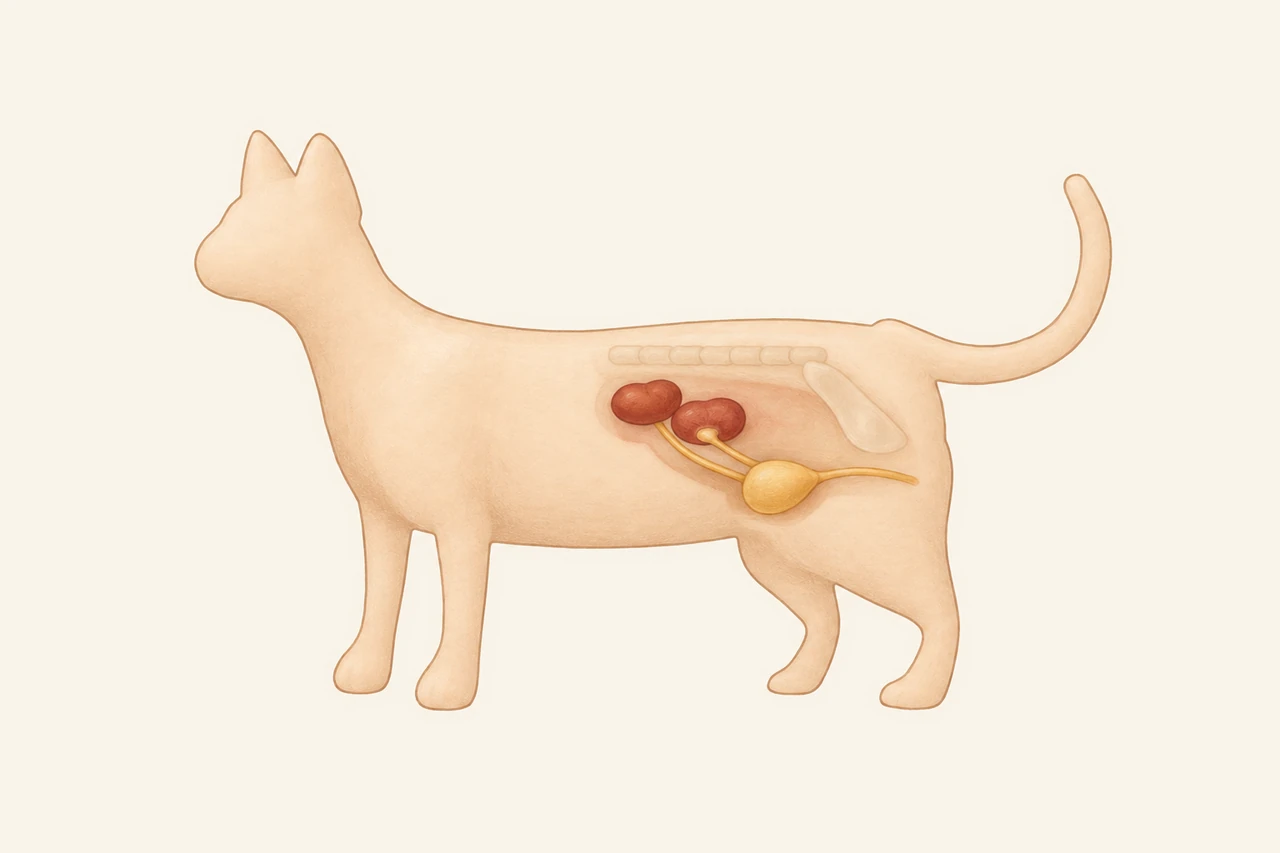
- Kidneys
- Ureters
- Bladder
- Urethra
Unlike the stomach or intestines, the two plump bean-shaped kidneys sit tucked snugly up against the underside of the lower back muscles, behind the ribcage edge.
From each kidney’s inner notch, a hair-thin muscular tube called a ureter sweeps gently backward along the roof of the abdomen to carry finished drops of urine into the bladder.
Neighboring organs & parts
What it does every day
- 01
Filtering blood and reclaiming needed water
Hundreds of thousands of microscopic nephrons filter fluid from blood first, then selectively pull almost all usable water, sugar, and salts back into circulation.
- 02
Concentrating waste in desert-adapted style
Healthy feline kidneys conserve moisture efficiently, turning metabolic protein waste into compact, concentrated urine so cats stay hydrated on small water intakes.
- 03
Steadying blood pressure and red blood cells
Beyond making urine, kidneys release hormone signals that help adjust blood pressure and encourage bone marrow to keep producing oxygen-carrying red blood cells.
What to notice at home
Select or scroll past each clue to highlight the matching parts on the plate.
- Kidneys
- Ureters
- Bladder
- Urethra
Because remaining healthy nephrons work overtime to compensate, kidney aging often progresses silently until about two-thirds of overall filtering capacity has faded.
As concentrating power eases, more water leaves in the urine—creating noticeably bigger, heavier clumps in the litter box and more frequent visits to the water fountain.
Over months, mild waste buildup and fluid loss can show up as a sharper spine to pat, walking away from familiar food, or fur looking slightly parted and unkept.
When wastes accumulate further, cats may feel queasy—licking their lips, sitting hunched over the water dish, or losing skin elasticity and appetite more abruptly.
With your veterinarian
Routine senior checkups check both blood markers and urine concentration together—never restrict drinking water to shrink urine clumps, as dehydration harms kidneys rapidly.
Depending on findings, veterinarians may also check blood pressure, urine protein, and imaging to tailor hydration, phosphorus-balanced diets, and comfortable supportive care.
Signs that cannot wait
- Sudden inability to pass urine or straining in the box with empty litter
- Refusing water and food alongside repeated vomiting or severe weakness
- Wobbly balance, sunken eyes, or sudden vision changes
Sources and limits of this atlas
Sources checked · · Source in English