THE PURRJUNG FIELD GUIDE · FELINE ANATOMY
Teeth & gums
Thirty sharp shearing tools, with most of each tooth tucked out of sight below the gumline
Sources checked ·
An educational anatomy guide for cat caregivers. It cannot diagnose illness, interpret lab results, or recommend medications or doses; individual care decisions belong with a veterinarian.
Signs that cannot wait- Anatomical terms
- Feline diphyodont dentition · Enamel, dentin, pulp, gingiva & alveolar bone
- Where it sits
- Upper and lower jawbones; 30 permanent adult teeth
- Distinctly feline
- Unlike people or dogs, cats have no flat grinding molars. Every cheek tooth has scissor-like blades built to slice food, and roughly two-thirds of each tooth sits buried beneath the gums.
- Everyday job
- Grasps and shears food into swallowable pieces while helping hold toys and groom loose threads or burrs from the coat.
Where it sits in the body
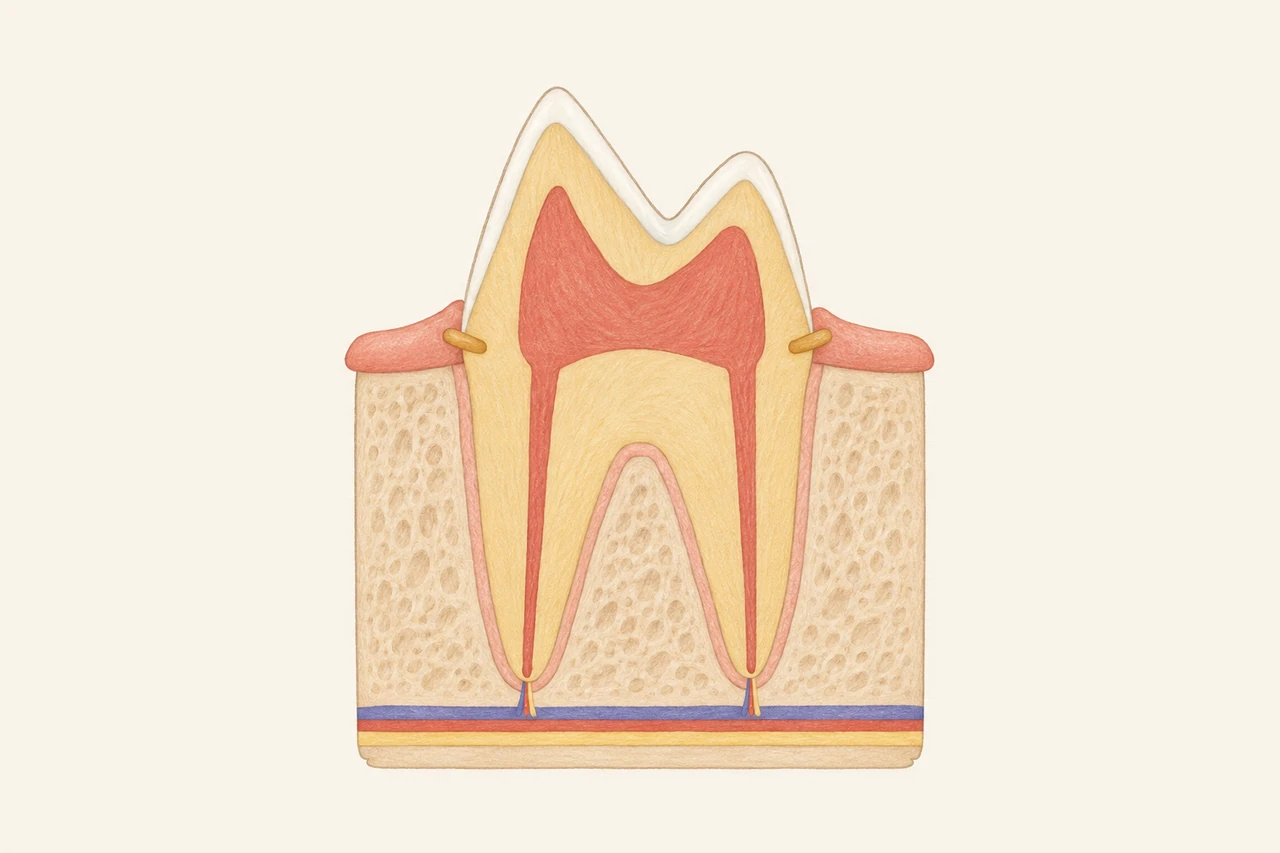
- Enamel
- Dentin
- Pulp
- Gingiva (gums)
- Tooth neck
- Root & jawbone
Each tooth rises from a deep socket in the upper or lower jawbone, wrapped at the collar by a snug cuff of pink gum tissue called the gingiva. From the outside you only see the smooth white enamel crown.
Just under that thin enamel cap lies sensitive dentin surrounding a living central pulp chamber with nerves and blood vessels. The narrow waist where crown meets root at the gumline is the tooth neck, anchored below by roots embedded in porous jawbone.
Neighboring organs & parts
What it does every day
- 01
Shearing rather than chewing
Carnassial cheek teeth slide past one another like scissors to cut food cleanly, which is why cats often swallow small pieces whole rather than grinding them flat.
- 02
Sensing pressure and temperature
Living dentin tubules and the central pulp chamber give each tooth feedback on bite force, alerting the body quickly if enamel cracks or wears away.
- 03
Sealing out oral bacteria
A healthy gum collar hugs the tooth neck tightly, forming a barrier that keeps everyday plaque and food debris from slipping down along the root and jawbone.
What to notice at home
Select or scroll past each clue to highlight the matching parts on the plate.
- Enamel
- Dentin
- Pulp
- Gingiva (gums)
- Tooth neck
- Root & jawbone
Notice a bright red border along the teeth, thicker or blood-tinged drool, or breath that suddenly turns sharp. Gum inflammation often builds quietly before a cat refuses food.
Feline tooth resorption often starts right at the gumline tooth neck. A cat may drop kibble, pause mid-bite, or shiver its lower jaw if something brushes a tender spot.
A broken canine tip or fractured cheek tooth can expose sensitive dentin or living pulp. Watch for tilting the head to one side, pawing at the mouth, or preferring soft food.
Because so much of the tooth sits inside jawbone, cats frequently keep eating normally even with deep root pain. A quick glance at home cannot rule out disease below the gumline.
With your veterinarian
During a physical exam, your veterinarian checks gum color, tartar, broken tips, and facial symmetry, though many cats dislike having sore mouths held open while awake.
A thorough dental assessment typically uses general anesthesia and full-mouth dental X-rays so the team can see tooth roots, bone loss, and resorption hiding below the gums.
Signs that cannot wait
- Sudden swelling under an eye, along the jaw, or on the cheek
- Active bleeding from the mouth or a freshly broken tooth with a dark pink dot in the center
- Refusing all food and water or pawing frantically at the face
Sources and limits of this atlas
Sources checked · · Source in English