THE PURRJUNG FIELD GUIDE · FELINE ANATOMY
Heart
A compact, fast-beating pump tucked quietly between the lungs
Sources checked ·
An educational anatomy guide for cat caregivers. It cannot diagnose illness, interpret lab results, or recommend medications or doses; individual care decisions belong with a veterinarian.
Signs that cannot wait- Anatomical terms
- Four-chambered feline heart & pericardium
- Where it sits
- Lower front chest cavity, slightly angled toward the left between the lung lobes
- Distinctly feline
- A relaxed cat’s heart beats roughly 140 to 220 times per minute—and unlike dogs, cats with heart disease almost never cough, so quiet breathing checks at home are far more informative than listening for a cough.
- Everyday job
- Drives oxygen-rich blood from the lungs out to muscles, kidneys, and brain, then brings oxygen-poor blood back through the lungs in one steady rhythm.
Where it sits in the body
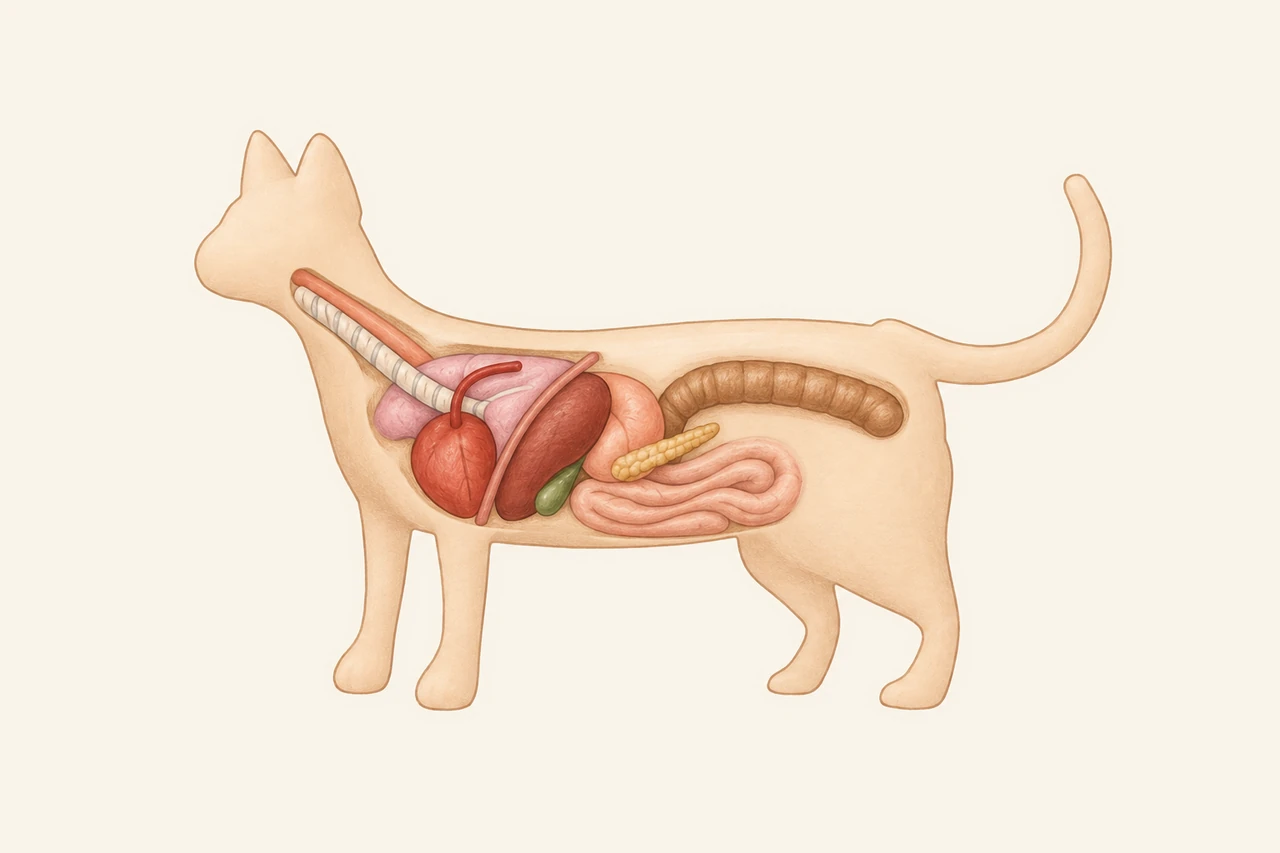
- Trachea
- Lungs
- Heart
- Esophagus
Protected behind the lower curve of the ribcage, the heart rests between the right and left lungs just above the breastbone and ahead of the diaphragm.
It connects directly to the great vessels feeding the lungs and the main aorta running backward under the spine toward the abdomen and hind legs.
Neighboring organs & parts
What it does every day
- 01
Driving two loops with every beat
One side sends returning blood through the lungs to pick up oxygen; the stronger muscular side pumps that oxygenated blood out to the entire body.
- 02
Keeping pressure balanced for organs
Steady pumping maintains blood pressure so kidneys can filter fluid and muscles stay warmed during both window naps and sudden hallway sprints.
- 03
Adapting pace to rest or excitement
Heart rate slows when your cat settles into a sunny nap and speeds up smoothly for play, jumps, or a stressful car ride to the clinic.
What to notice at home
Select or scroll past each clue to highlight the matching parts on the plate.
- Trachea
- Lungs
- Heart
- Esophagus
Because cats rarely cough when heart walls thicken or stretch, a cat can look comfortable on the sofa even when a subtle murmur or rhythm change is present.
If fluid begins backing up around or inside the lungs, resting breathing grows quietly faster first. Tracking sleeping breaths per minute helps spot gradual shifts early.
A cat that stops mid-chase to lie down flat, hides more than usual, or briefly loses balance may be struggling to keep blood flow steady during effort.
A clot traveling down the main vessel can abruptly cut circulation to one or both back legs, causing sudden weakness, crying, and cool pale paw pads—an immediate emergency.
With your veterinarian
Vets listen carefully for murmurs, extra gallop sounds, or irregular rhythms at annual checkups, though some cats with heart muscle changes have no audible murmur at all.
Depending on findings, a vet may discuss chest X-rays, blood pressure checks, blood screening, or a gentle heart ultrasound (echocardiogram) to look directly at wall thickness and chambers.
Signs that cannot wait
- Sudden dragging, weakness, severe pain, or cold paw pads in the hind legs
- Fast, labored, or open-mouth breathing at rest
- Sudden collapse, fainting, or pale gray-blue gums
Sources and limits of this atlas
Sources checked · · Source in English