THE PURRJUNG FIELD GUIDE · FELINE ANATOMY
Esophagus & stomach
A nimble muscular chute and compact acidic pouch built for frequent carnivore meals
Sources checked ·
An educational anatomy guide for cat caregivers. It cannot diagnose illness, interpret lab results, or recommend medications or doses; individual care decisions belong with a veterinarian.
Signs that cannot wait- Anatomical terms
- Esophagus & J-shaped feline stomach
- Where it sits
- Throat through the chest beside the trachea, opening just behind the liver on the upper left
- Distinctly feline
- Cats are obligate carnivores with a relatively small, strongly acidic J-shaped stomach suited to several small meals a day—and going even a few days without eating can quickly stress their liver.
- Everyday job
- Carries food safely through the chest, breaks protein down with acid and enzymes, and meters small softened portions into the intestine.
Where it sits in the body
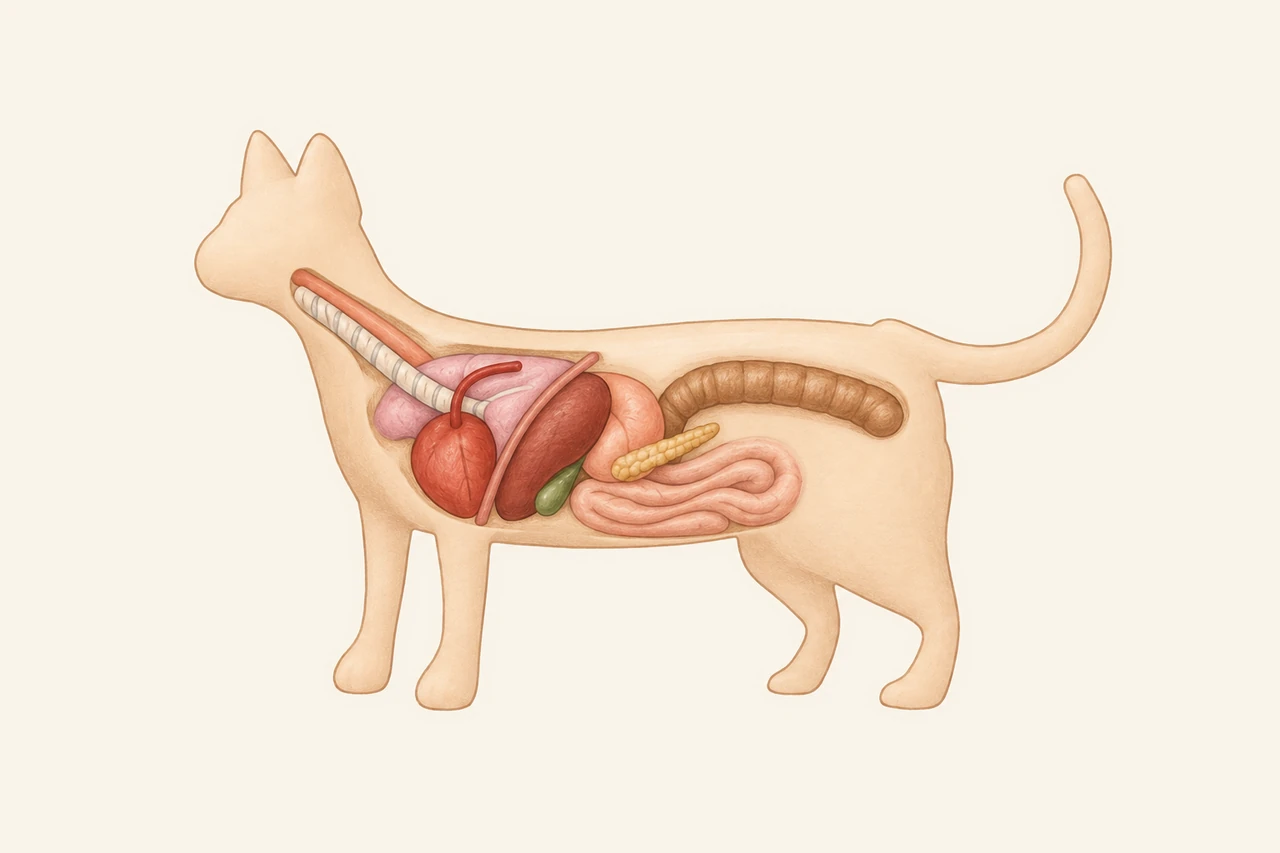
- Esophagus
- Liver
- Gallbladder
- Stomach
- Pancreas
- Small intestine
- Colon
The esophagus runs down the neck and through the chest behind the windpipe and heart, passing through a small muscular opening in the diaphragm to reach the abdomen.
Just behind the diaphragm and nestled partly beneath the liver sits the curved J-shaped stomach, which narrows at its exit sphincter toward the first loop of the small intestine.
Neighboring organs & parts
What it does every day
- 01
Sweeping food smoothly past the chest
Waves of muscle squeeze swallowed food and water down the esophagus toward the stomach while keeping a one-way valve closed at the entrance.
- 02
Unfolding proteins with strong stomach acid
Gastric juices soften meat and kibble, start digesting protein, and act as an early acid barrier against microbes picked up during eating or grooming.
- 03
Releasing meals in measured batches
Instead of dumping an entire meal at once, the stomach churns and releases smooth chyme into the small intestine at a pace the pancreas and bile can handle.
What to notice at home
Select or scroll past each clue to highlight the matching parts on the plate.
- Esophagus
- Liver
- Gallbladder
- Stomach
- Pancreas
- Small intestine
- Colon
Food coming right back up as an undigested tube with little warning or belly heaving often points to the esophagus or fast eating, whereas abdominal contractions and yellow foam indicate stomach vomiting.
Before vomiting, nauseated cats often lick their lips repeatedly, swallow hard, sniff the bowl then walk away, crouch in a tight loaf, or chew houseplant leaves or grass.
Even though cats groom daily, throwing up food, foam, or hairballs week after week is not normal. Keeping a simple log of how often it happens gives your vet vital context.
When stomach upset keeps a cat away from its bowl for more than a day or two, stored body fat rushes toward the liver faster than feline liver cells can clear it.
With your veterinarian
Describe whether your cat heaved its belly first, what the material looked like, how soon after eating it occurred, and whether water stays down.
Vets palpate the abdomen gently and may check blood work, X-rays, or ultrasound to separate stomach irritation, swallowed objects, hair-related motility changes, or problems outside the gut.
Signs that cannot wait
- Repeatedly vomiting, unable to keep water down, or vomiting dark coffee-ground material or blood
- Suspected swallowing of string, ribbon, lilies, human medicine, or household chemicals
- Complete refusal to eat for more than 24 to 48 hours, or severe lethargy
Sources and limits of this atlas
Sources checked · · Source in English