THE PURRJUNG FIELD GUIDE · FELINE ANATOMY
Airways & lungs
Delicate branching airways that turn every quiet nap into steady oxygen exchange
Sources checked ·
An educational anatomy guide for cat caregivers. It cannot diagnose illness, interpret lab results, or recommend medications or doses; individual care decisions belong with a veterinarian.
Signs that cannot wait- Anatomical terms
- Trachea, bronchi & pulmonary lobes
- Where it sits
- Neck (trachea) into the ribcage cavity on both sides of the heart
- Distinctly feline
- A healthy sleeping cat normally takes roughly 15 to 30 unhurried breaths a minute. Because feline airways are narrow and wrapped in reactive smooth muscle, smoke, dust, or allergens can make them tighten quickly.
- Everyday job
- Draws fresh air deep into spongy lung lobes to bring oxygen into the blood and gently clears carbon dioxide with every soft exhale.
Where it sits in the body
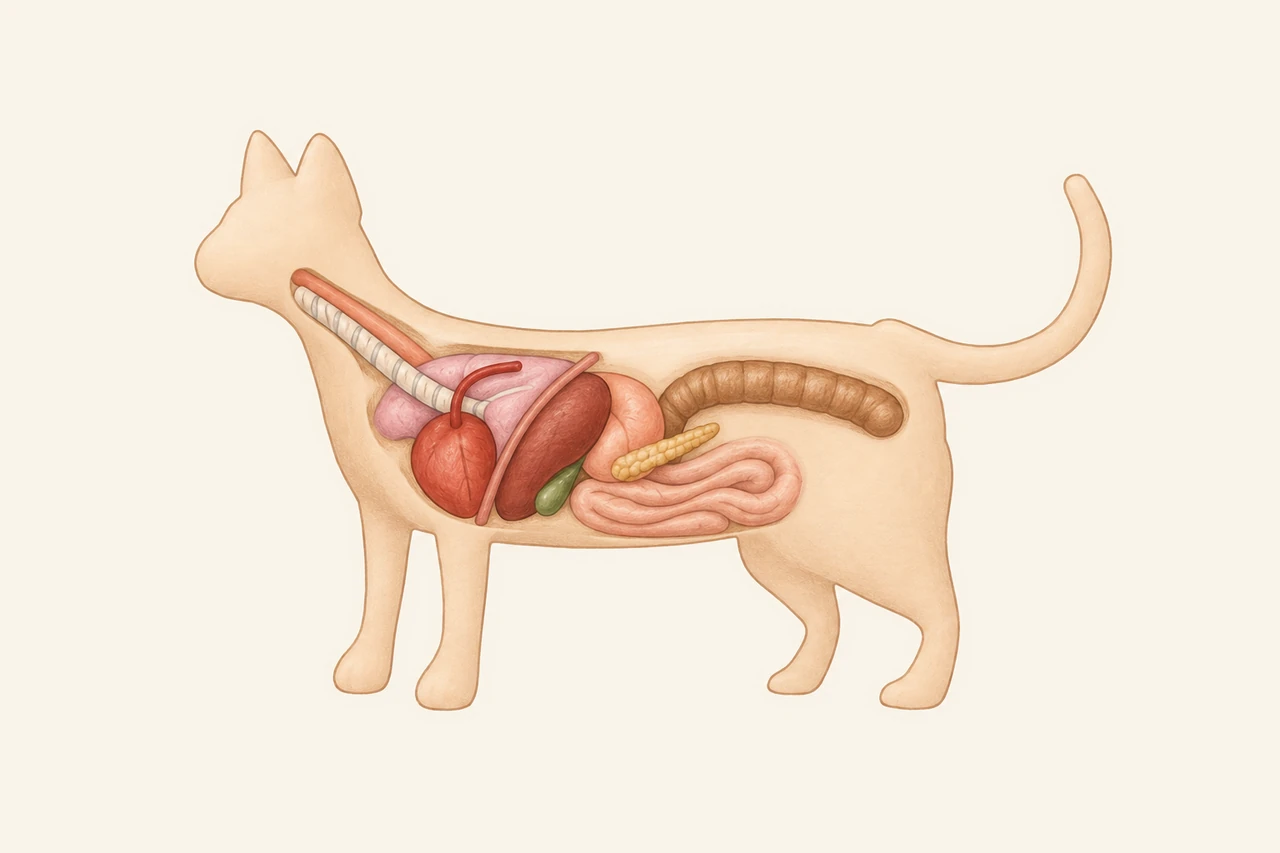
- Trachea
- Lungs
- Heart
- Esophagus
Air enters through the nose and throat into the trachea—a flexible tube reinforced with C-shaped cartilage rings running down the front of the neck beside the esophagus.
Inside the ribcage, the trachea splits into smaller and smaller bronchi that fill the right and left lungs around the heart, ending in millions of microscopic air sacs right up against the diaphragm.
Neighboring organs & parts
What it does every day
- 01
Moving air smoothly through narrow passages
Cartilage rings keep the main windpipe open as your cat curls, stretches, or twists, while smaller branching airways warm, humidify, and filter inhaled air.
- 02
Swapping oxygen and carbon dioxide
Across paper-thin walls at the end of the airways, oxygen steps into passing red blood cells while waste carbon dioxide leaves on the next exhale.
- 03
Trapping dust before it goes deeper
A fine layer of mucus and tiny sweeping hairs lines the airways to catch pollen, litter dust, and droplets and move them gently up toward the throat.
What to notice at home
Select or scroll past each clue to highlight the matching parts on the plate.
- Trachea
- Lungs
- Heart
- Esophagus
When your cat is sound asleep in a quiet room, count each chest rise-and-fall for 30 seconds and double it. Consistent numbers over roughly 30 breaths a minute, or extra belly push, deserve a vet call.
A cat with irritated airways often squats low with elbows out and neck stretched straight ahead, making a dry wheeze or hacking sound without ever producing a hairball.
A whistle, honk, or rattle coming from the throat or windpipe points toward upper-airway narrowing or mucus. Keep rooms free of tobacco smoke, scented sprays, and dusty litter.
Cats normally breathe quietly through their nose at rest. Panting while calm, flared nostrils, or heaving ribs and belly together signals urgent respiratory distress.
With your veterinarian
A veterinarian listens to both sides of the chest with a stethoscope, checks gum color, and may suggest chest X-rays to look at airway walls, lung tissue, or fluid.
Short smartphone video clips of a coughing fit or sleeping breathing rate—taken only when your cat is stable, never during distress—help vets distinguish airway noise from hairball retching.
Signs that cannot wait
- Open-mouth breathing or panting while resting indoors
- Blue, gray, or very pale gums or tongue, or collapsing from breathlessness
- Heaving belly muscles or neck stretched forward just to pull air in
Sources and limits of this atlas
Sources checked · · Source in English