THE PURRJUNG FIELD GUIDE · FELINE ANATOMY
Liver, gallbladder & pancreas
The body’s chemical workshop tucked behind the diaphragm, linked by a shared feline duct
Sources checked ·
An educational anatomy guide for cat caregivers. It cannot diagnose illness, interpret lab results, or recommend medications or doses; individual care decisions belong with a veterinarian.
Signs that cannot wait- Anatomical terms
- Hepatic lobes, gallbladder & pancreas
- Where it sits
- Front of the abdomen right behind the diaphragm, wrapping the stomach and first intestinal loop
- Distinctly feline
- In most cats, the bile duct from the gallbladder and the main duct from the pancreas merge into a single shared opening into the small intestine—which helps explain why liver, pancreas, and gut inflammation often overlap.
- Everyday job
- Processes absorbed nutrients, stores energy safely, releases bile to handle fats, and supplies digestive enzymes plus blood-sugar hormones like insulin.
Where it sits in the body
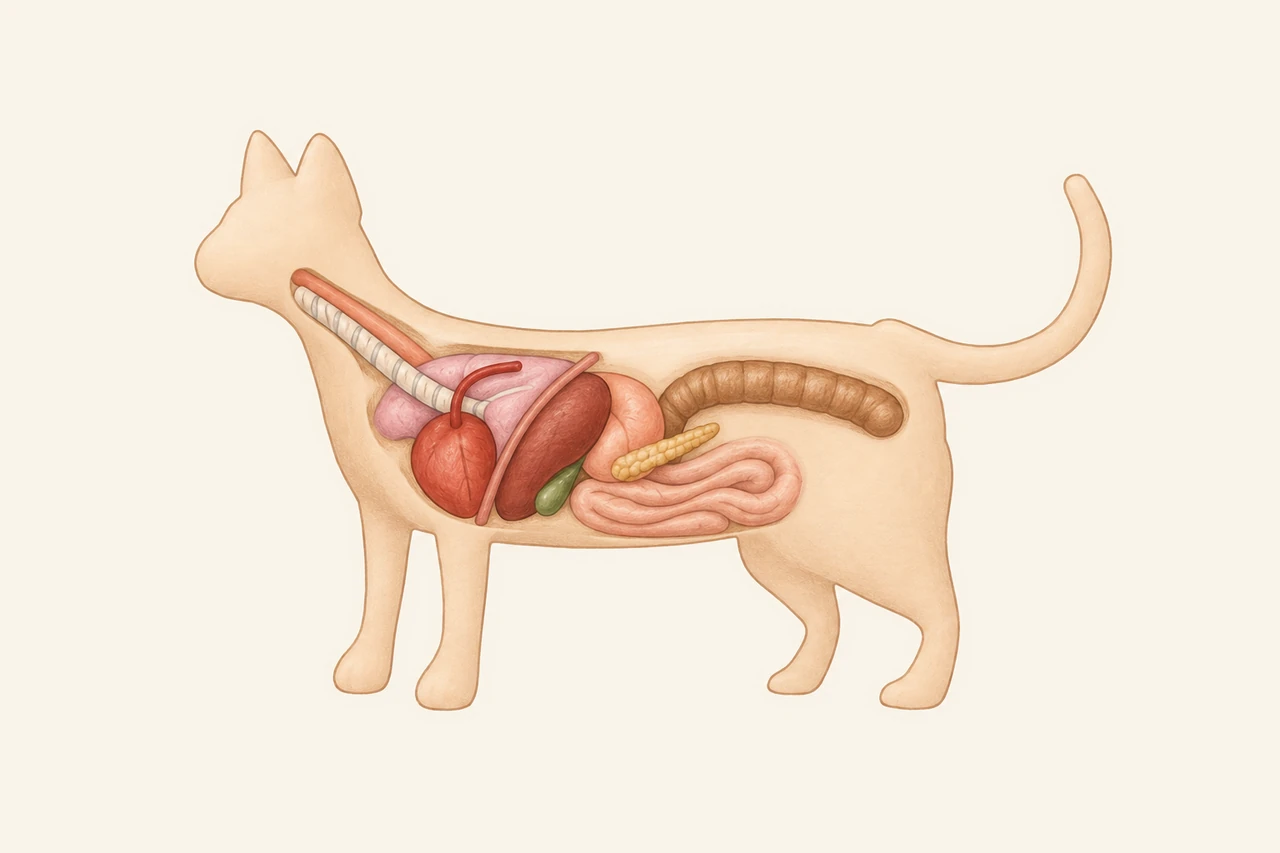
- Esophagus
- Liver
- Gallbladder
- Stomach
- Pancreas
- Small intestine
- Colon
The rich reddish-brown liver sits snugly against the back curve of the diaphragm, sheltering the small pear-shaped gallbladder tucked underneath its lobes.
Just behind the stomach, the flat ribbon-like pancreas rests along the curve of the upper small intestine, sending its digestive juices down toward that shared duct entrance.
Neighboring organs & parts
What it does every day
- 01
Filtering nutrients and clearing toxins
Blood leaving the intestines flows straight through the liver first, where cells store vitamins, build proteins, regulate amino acids, and safely break down wastes.
- 02
Making and storing bile for dietary fats
The liver produces green-gold bile and stores it in the gallbladder, squeezing a measured drop into the small intestine after meals to break fats into tiny droplets.
- 03
Digesting meals and balancing blood sugar
The pancreas performs two distinct jobs: releasing enzymes that dismantle protein, fat, and starch in the gut, and secreting hormones like insulin directly into the bloodstream.
What to notice at home
Select or scroll past each clue to highlight the matching parts on the plate.
- Esophagus
- Liver
- Gallbladder
- Stomach
- Pancreas
- Small intestine
- Colon
When a cat—especially an overweight cat—stops eating for just a few days, fat floods the liver faster than it can be processed, leading to a serious condition called hepatic lipidosis.
Unlike dogs that often crouch in obvious belly pain, cats with pancreatic irritation usually just hide under the bed, sleep more, skip meals, or eat erratically.
Because bile, pancreatic fluid, and upper intestinal bacteria meet at one doorway, cats can experience overlapping flare-ups across all three neighbors—sometimes called triaditis.
If bile flow slows or backs up, yellow pigment (jaundice) appears first in the pale skin inside the earflaps, along the gums, or on the whites of the eyes. Book a prompt vet visit.
With your veterinarian
Because liver, gallbladder, pancreas, and small-intestine signs blur together at home, veterinarians rely on blood enzyme panels, feline-specific pancreas tests, and abdominal ultrasound.
If your cat stops eating for any reason—even a stressful move or a food change—call your vet promptly rather than waiting to see if hunger returns on its own.
Signs that cannot wait
- Any yellow tint in the inner ears, gums, or whites of the eyes
- Refusing all food for more than 24 to 48 hours (even sooner in kittens or heavier cats)
- Extreme weakness, repeated vomiting, or sudden collapse
Sources and limits of this atlas
Sources checked · · Source in English