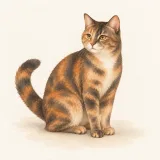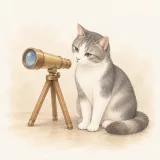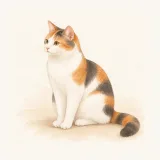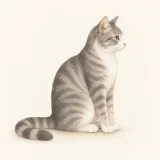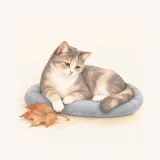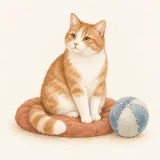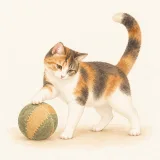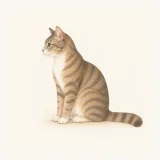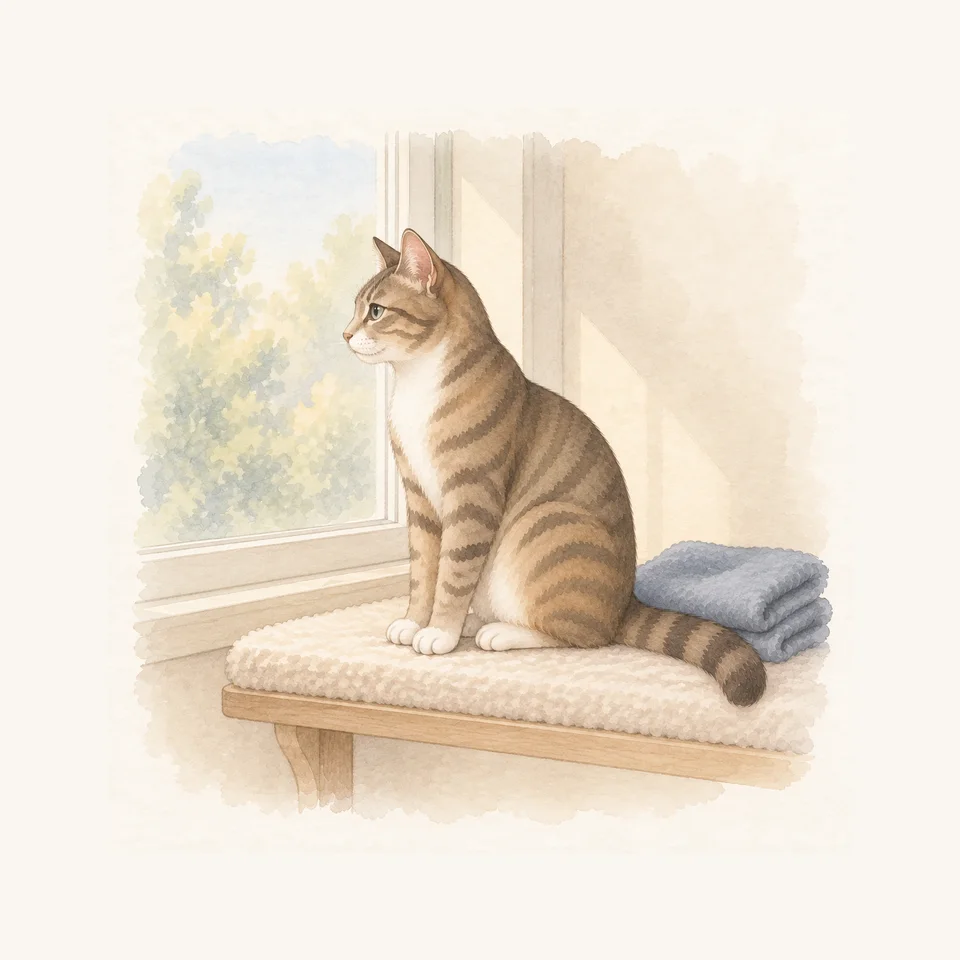
Company & curiosity
- Where does your cat choose to observe quietly?
- Which familiar toys or places do they return to?
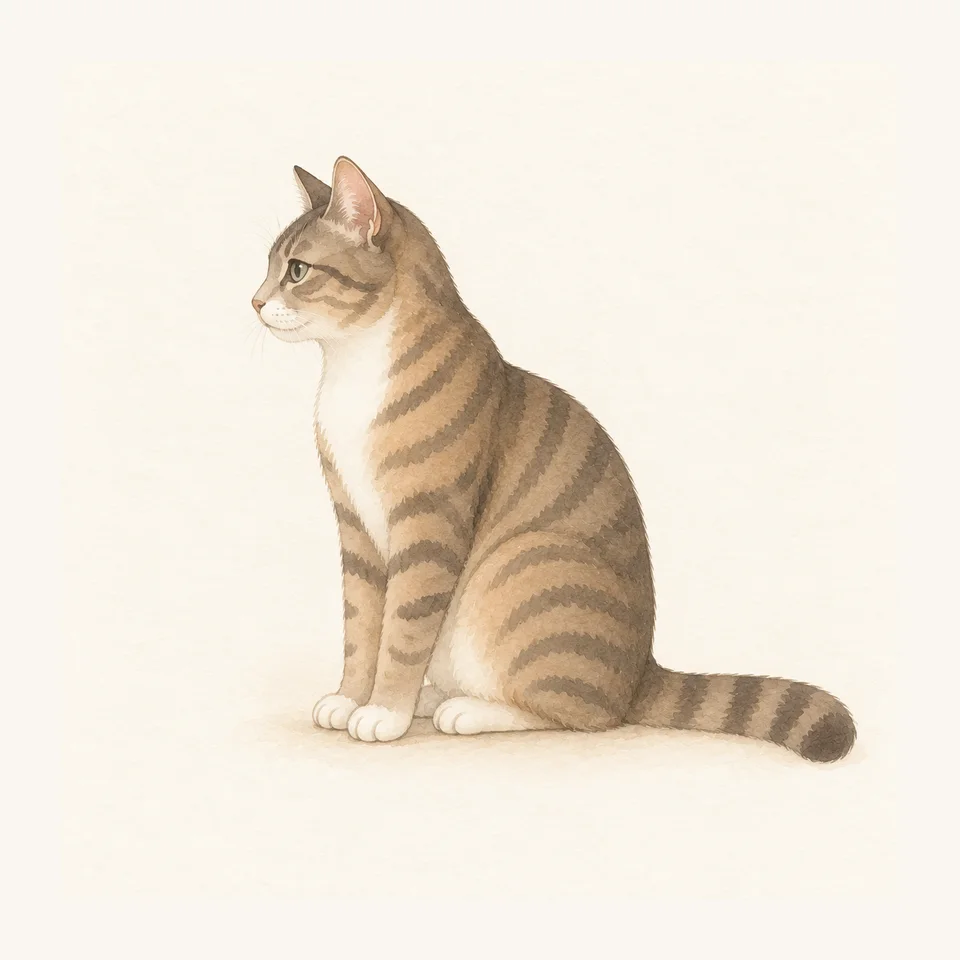
Prefers quiet · Likes the familiar · Keeps some space · Regular hours
It naps on the same level of the cat tree and keeps choosing the same old toy. It comes out at about the same times each day, and when it has had enough company it goes back to a quiet spot on its own. It does not need someone beside it all the time.
Everyday scenes
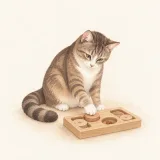
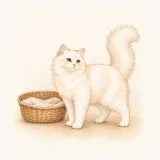
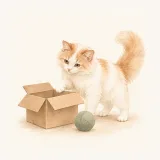
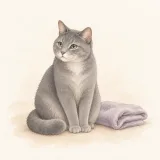
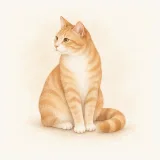
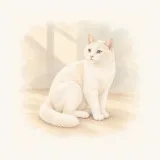
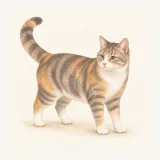
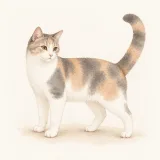
Four watercolor scenes from an imagined day, with a few questions to ask about your own cat. A real cat may choose differently from one day to the next.
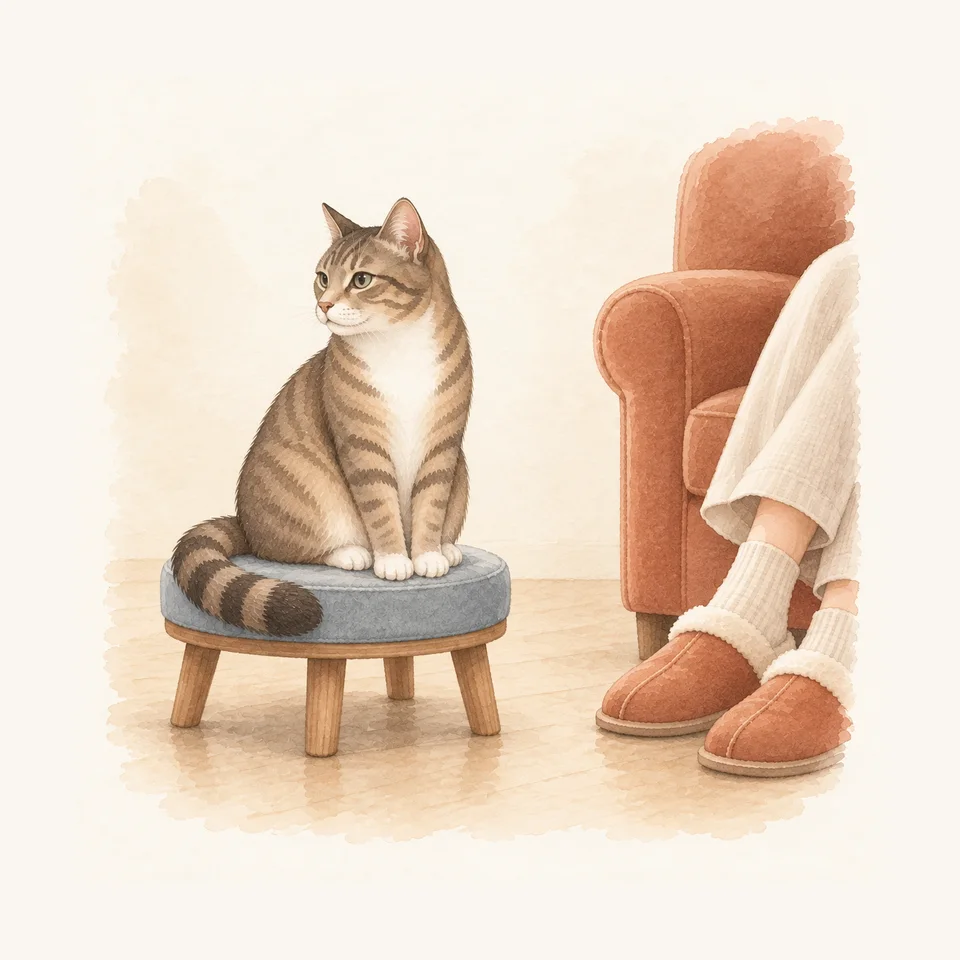
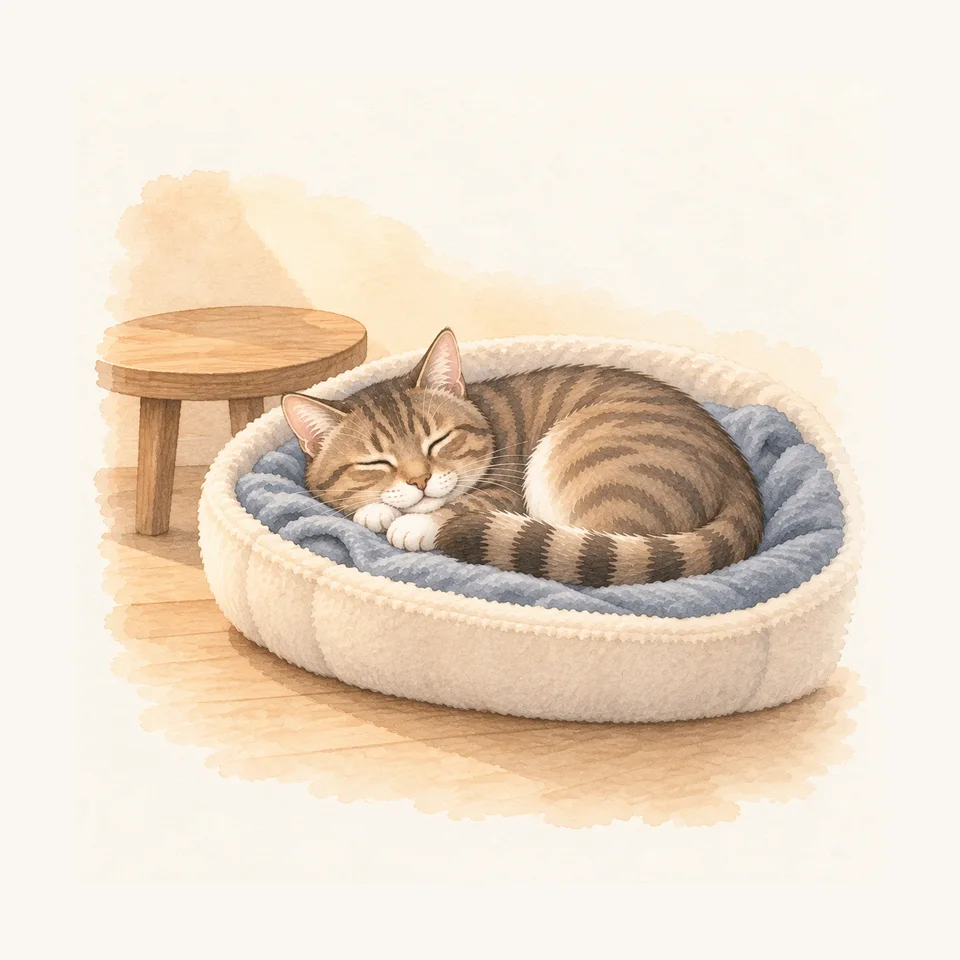
Keep the cat tree, the window seat and the bed where they are; if furniture has to move, move one thing at a time. Wash its blanket instead of replacing it, and keep the worn cloth mouse even when a new toy arrives.
Whatever the type, every cat needs food, water, a litter box, safe rest and play within easy reach. Adjust the home to this cat and to the cats already living there; a type cannot decide whether cats should live together.
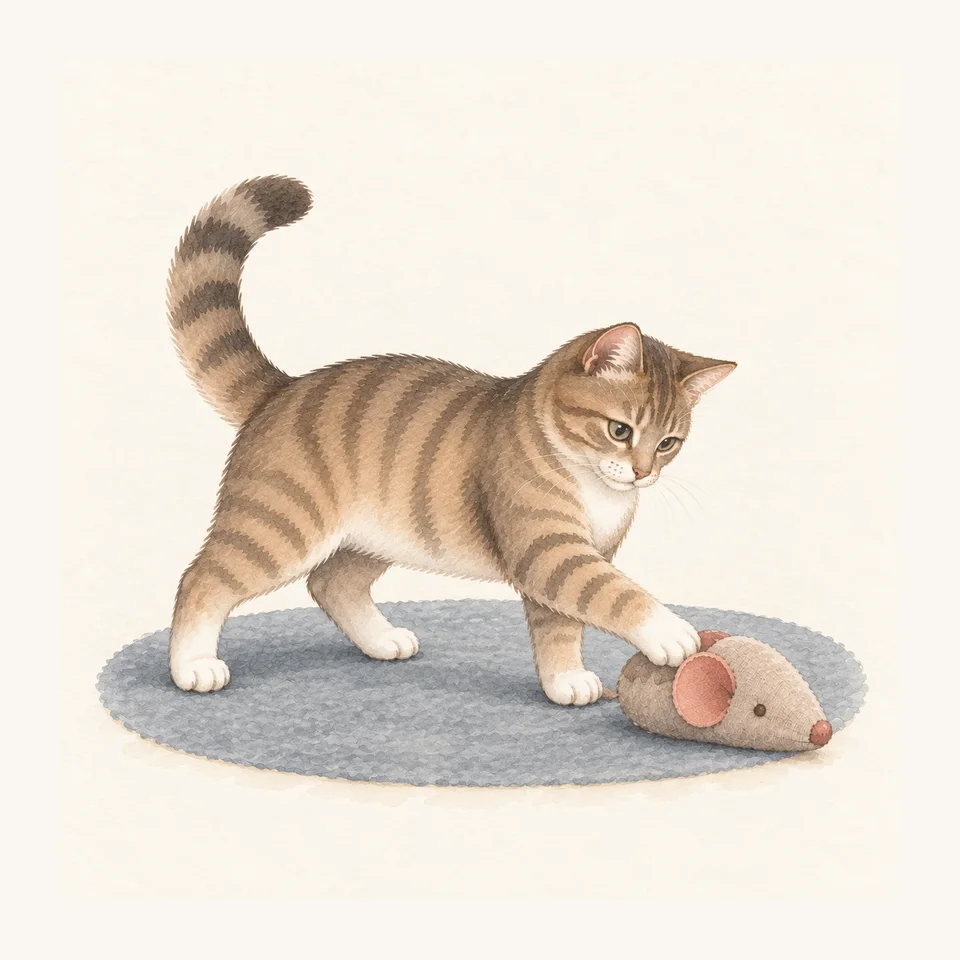
Choosing the same toy and the same level of the cat tree every day can look like a cat with no curiosity. It has tried the other options and kept the ones it likes. Going back to a quiet spot after a while with you means it has had enough company for now, not that something upset it.
Its days look alike, which makes slow changes easy to miss or to explain as habit. A water bowl that empties faster, larger clumps in the litter box, or a little less eaten each week are worth writing down. Changes like these can build up gradually, more often in older cats, and a vet reads them together with blood and urine tests.
A change from this cat’s usual pattern is a reason to check the body first. Note what changed and when it started, and ask your veterinarian instead of putting it down to the type.
Each of these types differs from ISTJ on one dimension.
This compares type descriptions for fun. How two cats actually get along depends on each cat and their home.
View comparisonsJust for fun. The questions draw on cat behavior research, but the quiz itself has not been scientifically validated and cannot diagnose anything.