Company & curiosity
- When does your cat choose to join people?
- Which familiar toys or places do they return to?
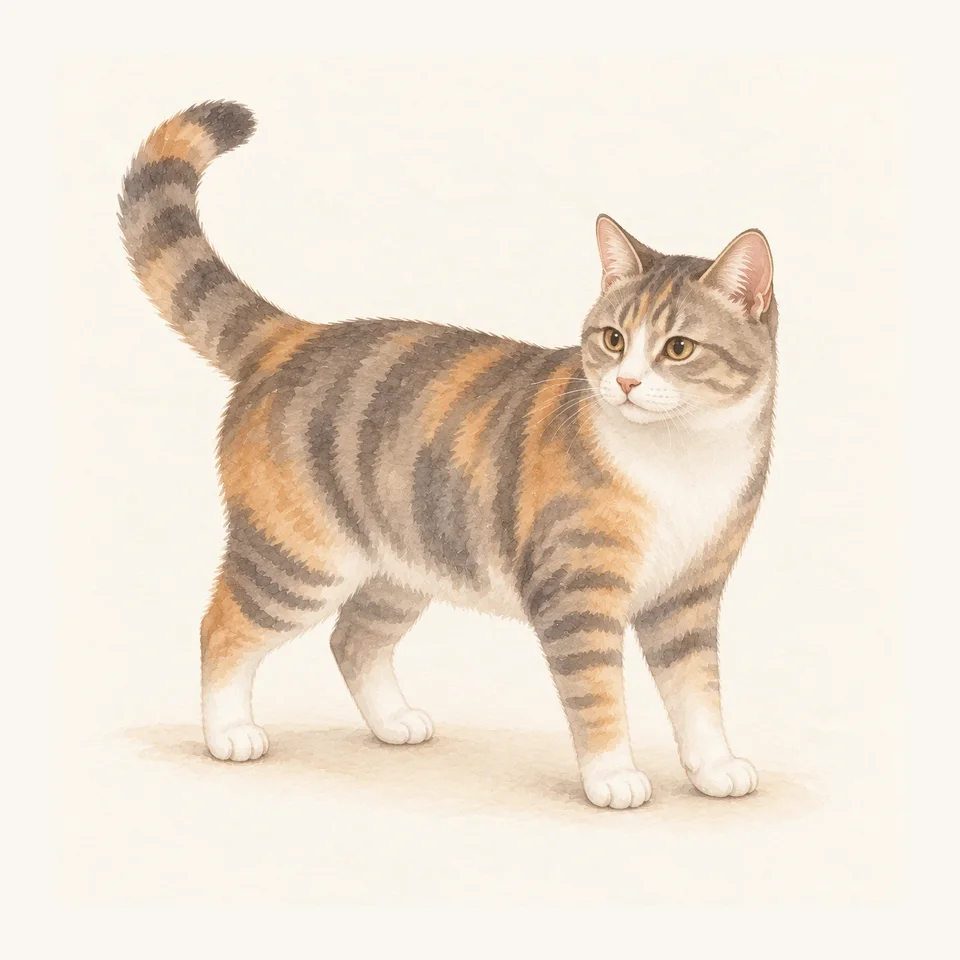
Joins in · Likes the familiar · Keeps some space · Goes with the moment
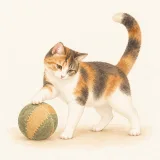
Any commotion at home brings it over to look. Wiggle its familiar old toy and it is playing at once; when it has had enough, it turns and leaves, flopping down somewhere nearby. It does not care much for being held, and its hours are hard to predict.
Everyday scenes
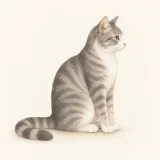
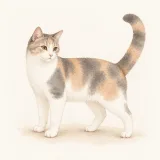
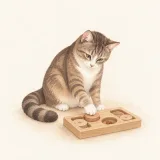
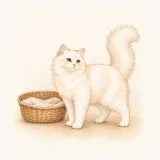
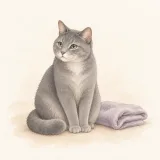
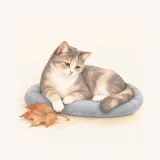
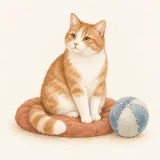
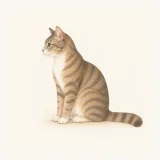
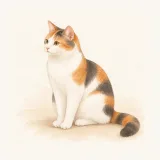
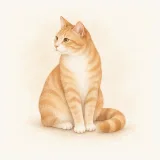
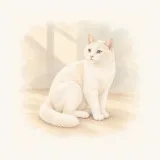
Four watercolor scenes from an imagined day, with a few questions to ask about your own cat. A real cat may choose differently from one day to the next.
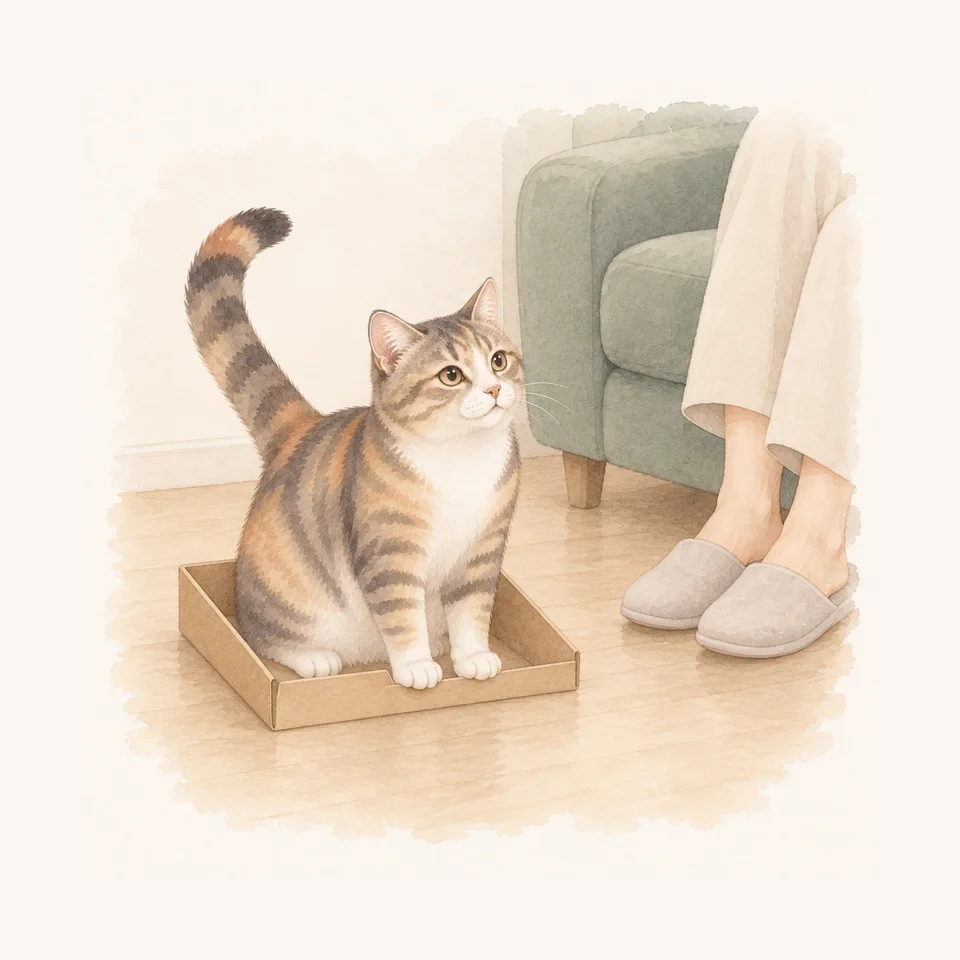
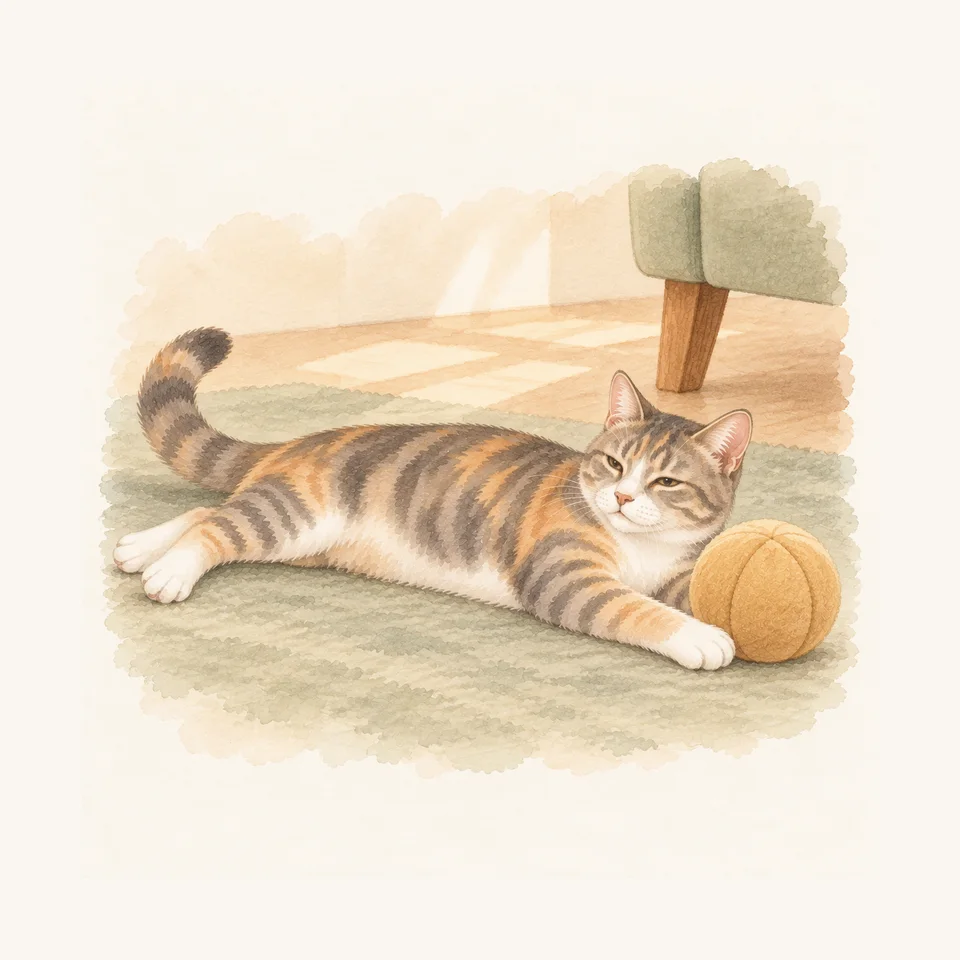
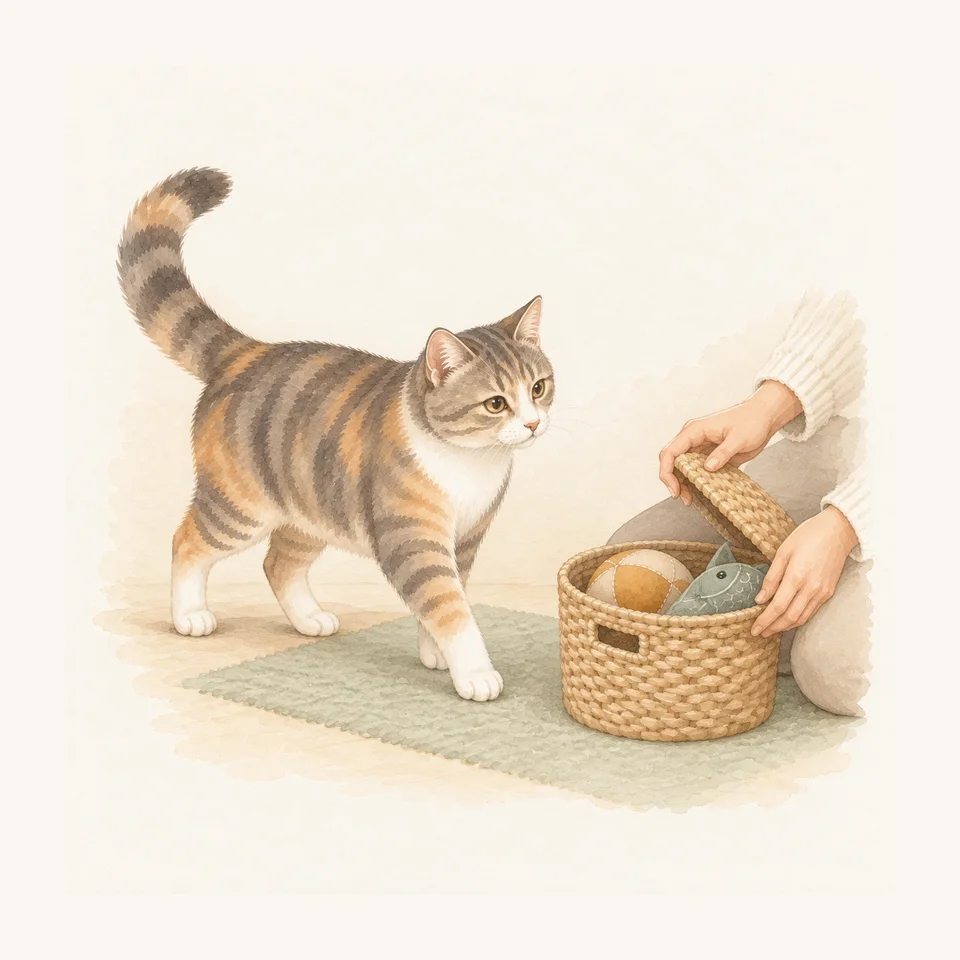
Keep the toy basket where it can watch you open it, and leave floor space near where people are busy, because that is where it wants to be. A low box at your feet gives it a front-row seat without a lap. It rests wherever the game ended, so a washable rug is more use than a bed in another room.
Whatever the type, every cat needs food, water, a litter box, safe rest and play within easy reach. Adjust the home to this cat and to the cats already living there; a type cannot decide whether cats should live together.
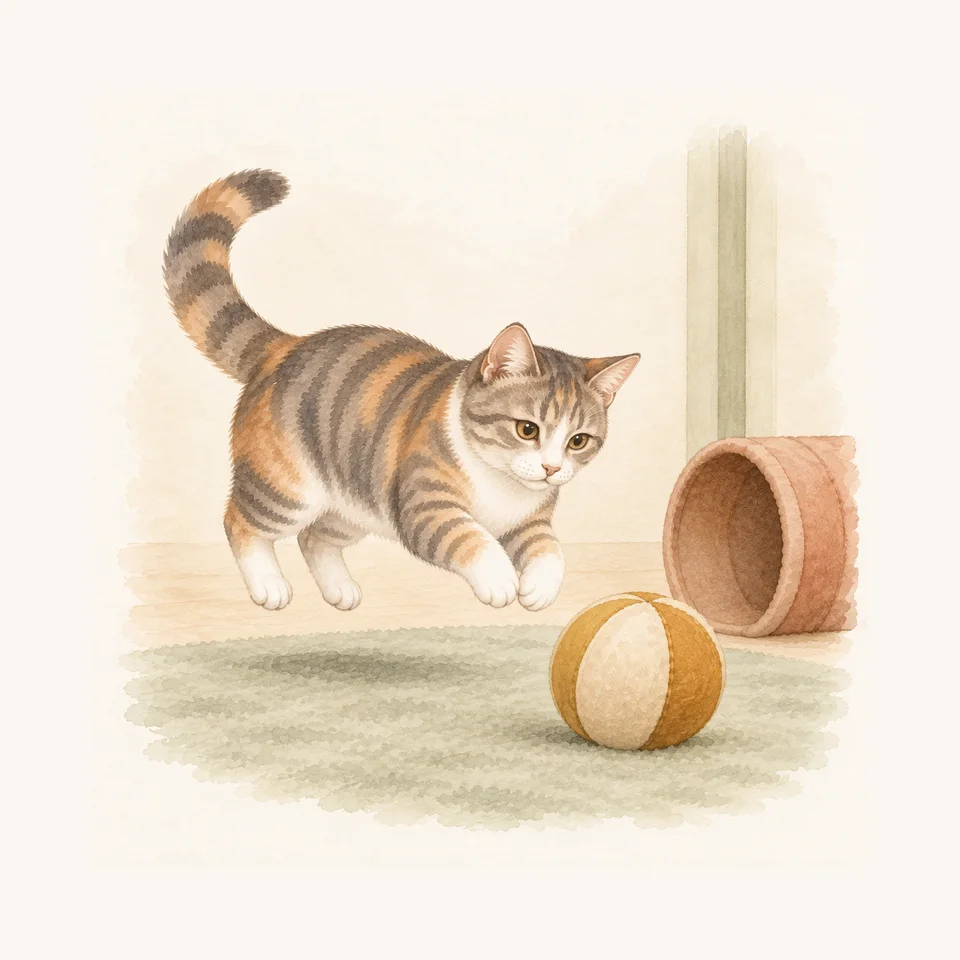
Turning and walking off the moment it has had enough can feel abrupt. That is how this cat ends a game, and it usually lies down a few steps away, still in the room. Not wanting to be held does not change the fact that it came over to see what you were doing.
Its game starts with a pounce from a standing start. If it begins to hesitate before the jump, lands stiffly, or lets the old ball roll past, the cause is in how it moves, not in its interest. Add a lower step to the places it uses and have the stiffness checked; do not push it to play harder.
A change from this cat’s usual pattern is a reason to check the body first. Note what changed and when it started, and ask your veterinarian instead of putting it down to the type.
Each of these types differs from ESTP on one dimension.
This compares type descriptions for fun. How two cats actually get along depends on each cat and their home.
View comparisonsObserve bursts of activity, make play safer, and notice when running is a change from your cat's usual pattern.
Just for fun. The questions draw on cat behavior research, but the quiz itself has not been scientifically validated and cannot diagnose anything.