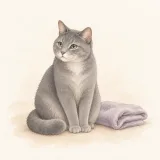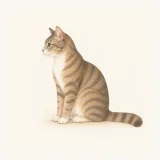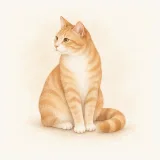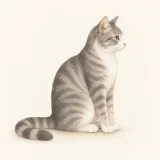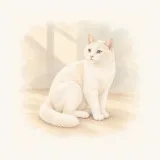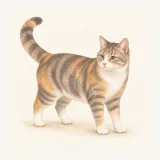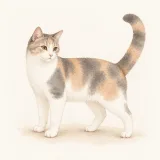
Company & curiosity
- Where does your cat choose to observe quietly?
- How do they approach a new toy or space?
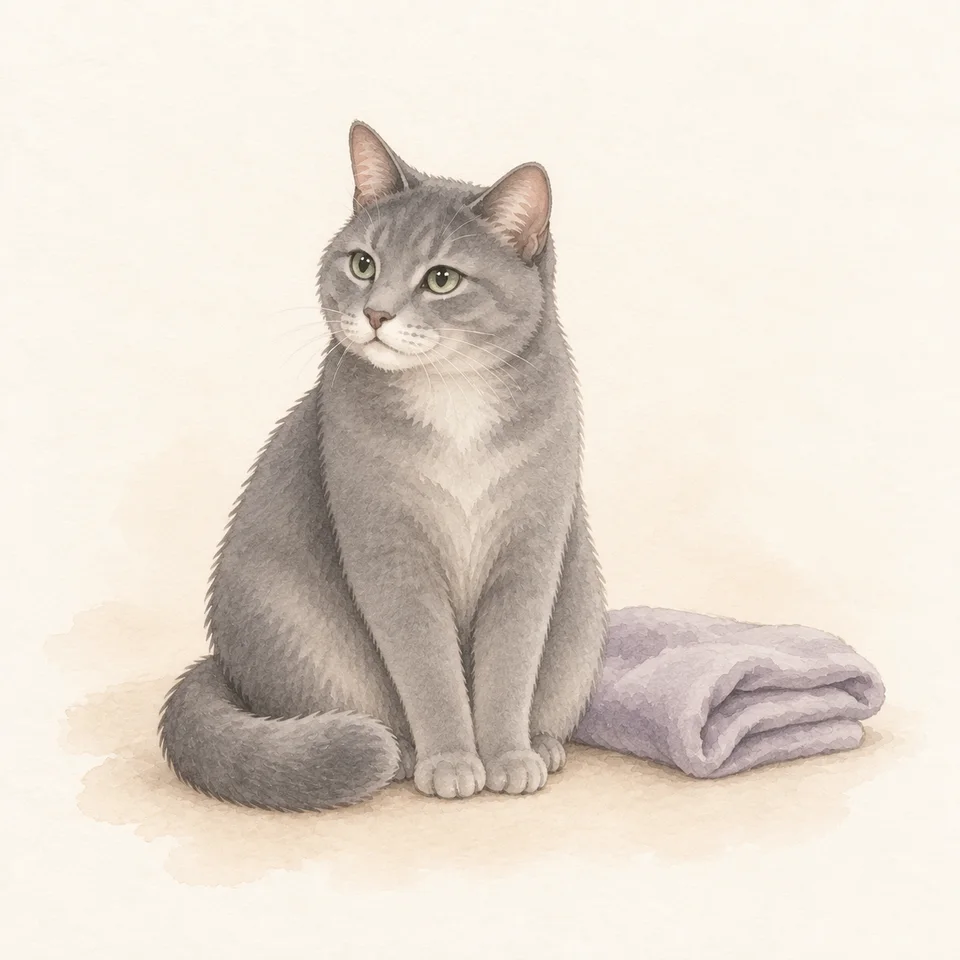
Prefers quiet · Tries new things · Stays close · Regular hours
It keeps away when the house is busy. Once things quiet down, it jumps onto the arm of the sofa and sits beside you. It walks over slowly to look at a new toy, plays for a while, then comes back. Most evenings it shows up at that spot around the same time.
Everyday scenes
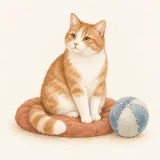
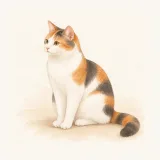
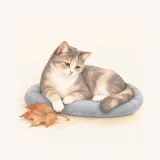
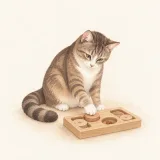
Four watercolor scenes from an imagined day, with a few questions to ask about your own cat. A real cat may choose differently from one day to the next.
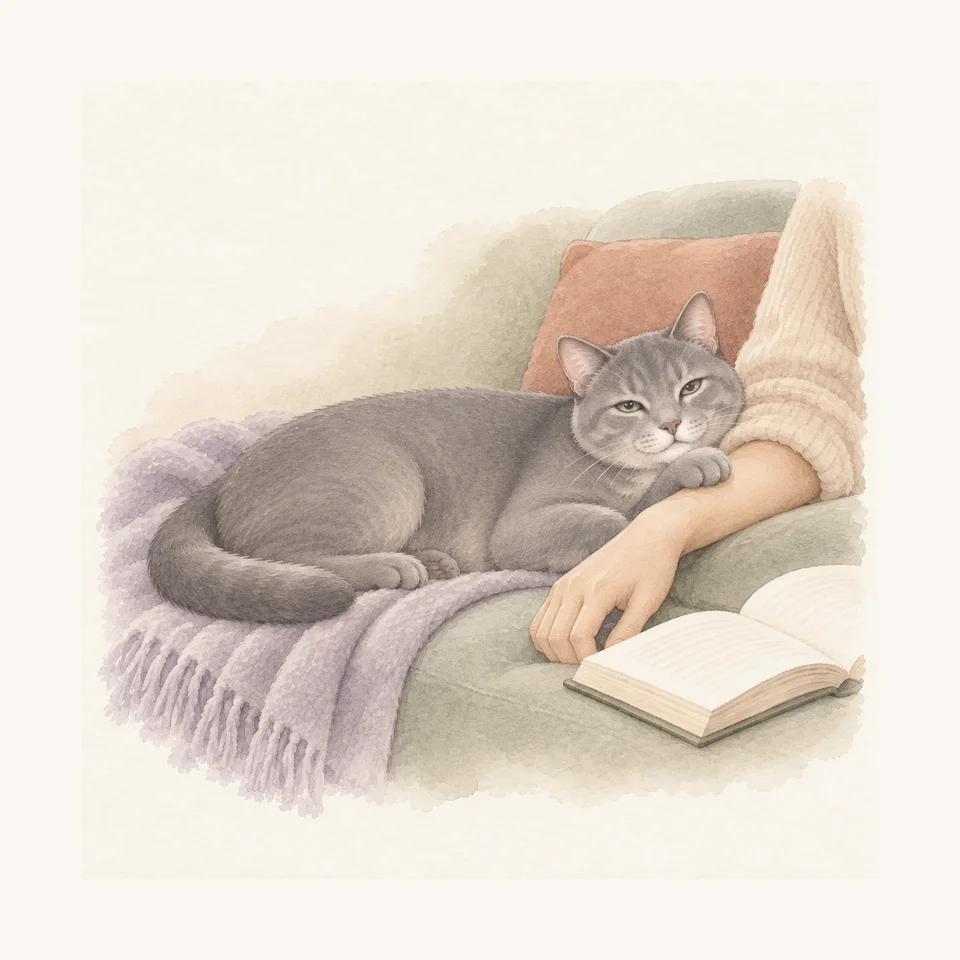
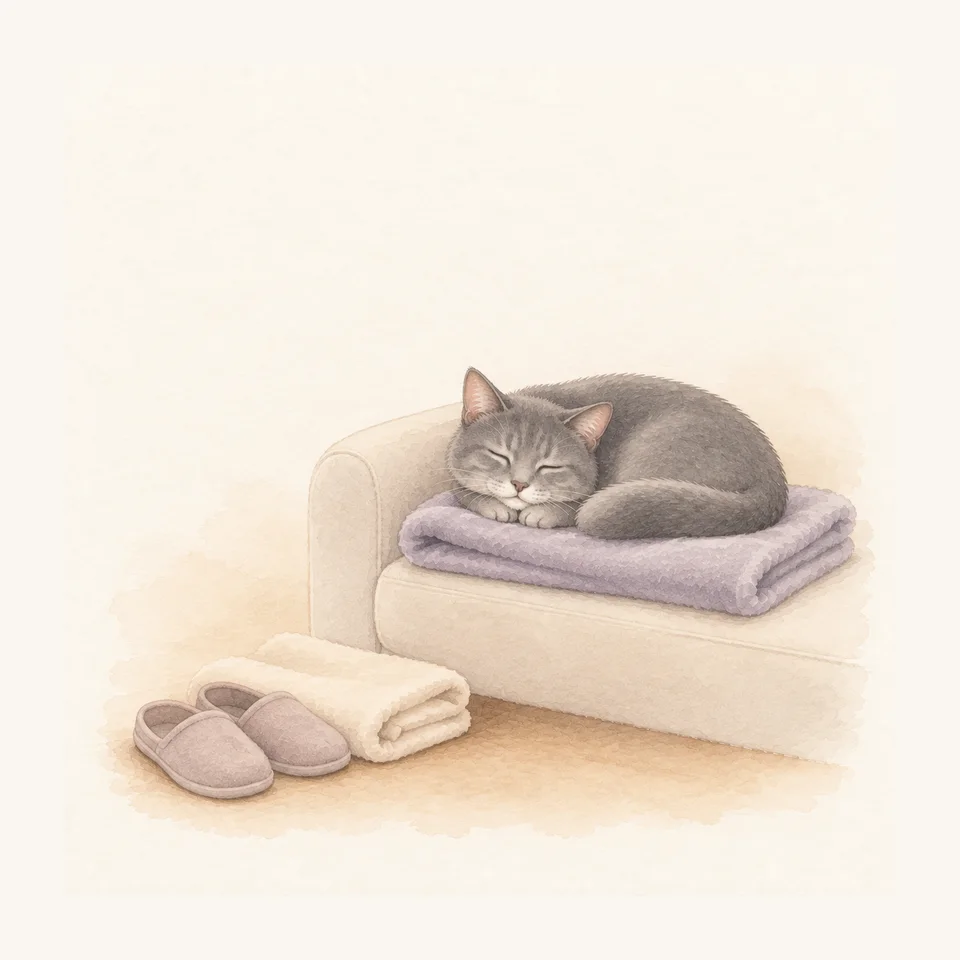
Keep one room or corner that stays quiet when the house is busy, with a way to reach it that does not pass through the crowd. Leave its folded blanket at the end of the sofa, where it joins you once things settle.
Whatever the type, every cat needs food, water, a litter box, safe rest and play within easy reach. Adjust the home to this cat and to the cats already living there; a type cannot decide whether cats should live together.
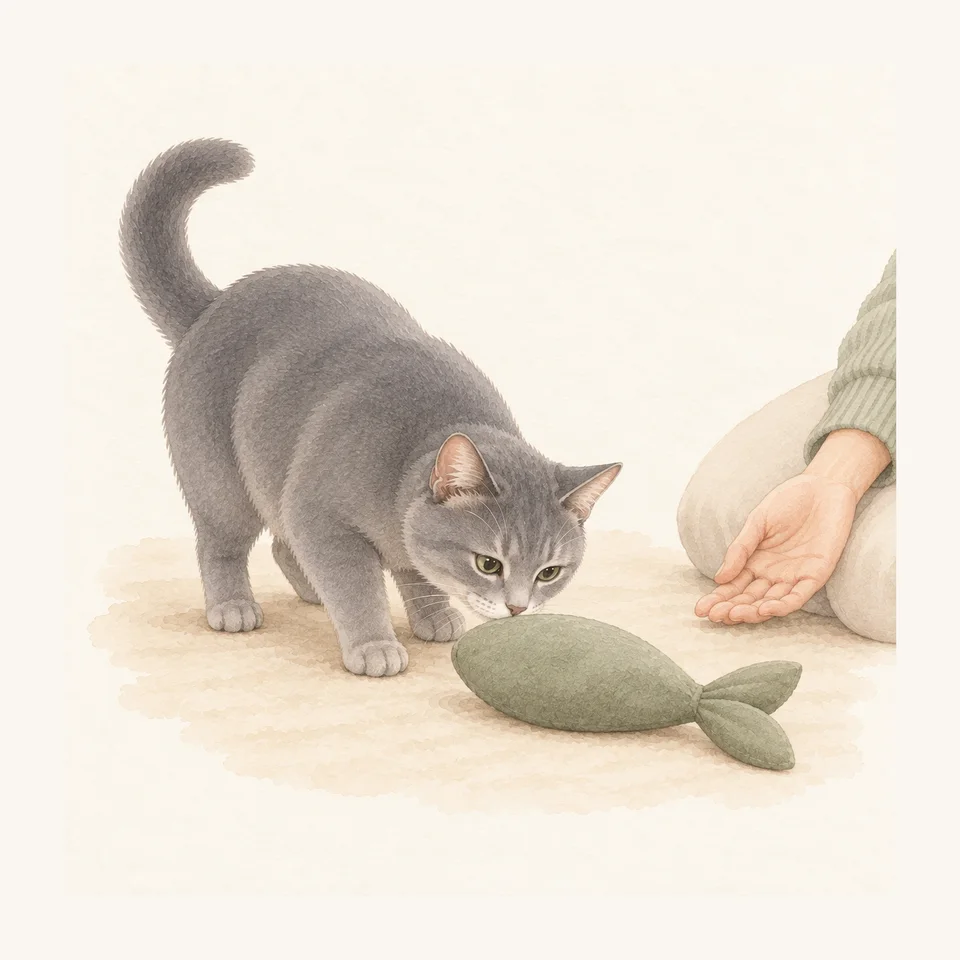
Leaving when the house fills up can be taken for a fear of people. More often it prefers one quiet person to a crowd, and it comes back to the arm of the sofa once the room is calm. Approaching a new toy slowly is caution, not dislike.
In the evening it rests its cheek on your arm, which puts its face close to yours. If you notice new bad breath or drooling, or it starts dropping food or chewing differently, have its mouth examined. A cat can keep eating despite mouth pain, so a normal appetite does not rule a problem out.
A change from this cat’s usual pattern is a reason to check the body first. Note what changed and when it started, and ask your veterinarian instead of putting it down to the type.
Each of these types differs from INFJ on one dimension.
This compares type descriptions for fun. How two cats actually get along depends on each cat and their home.
View comparisonsIs your cat outgoing or more reserved? Compare everyday social behavior, respect their choice of distance, and notice changes over time.
Just for fun. The questions draw on cat behavior research, but the quiz itself has not been scientifically validated and cannot diagnose anything.