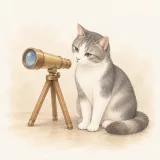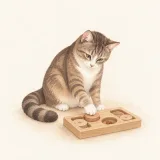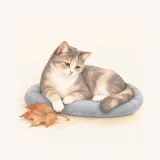
Company & curiosity
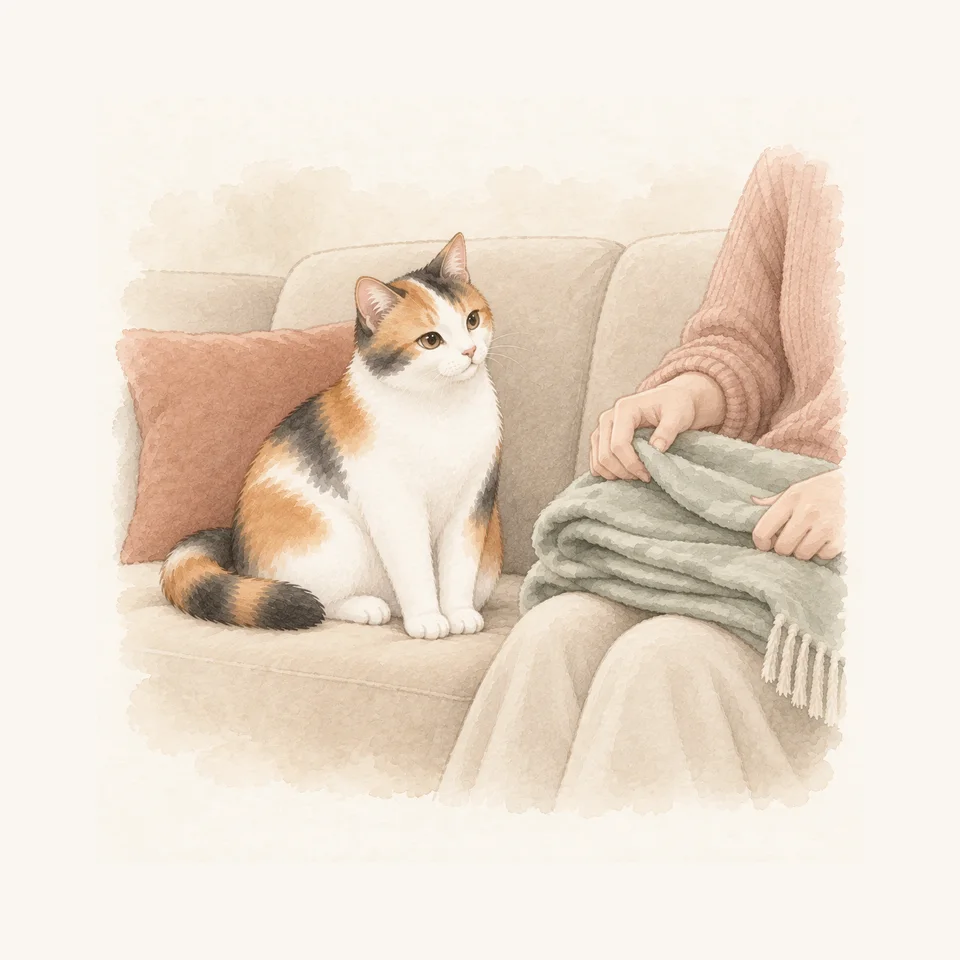
- Where does your cat choose to observe quietly?
- Which familiar toys or places do they return to?
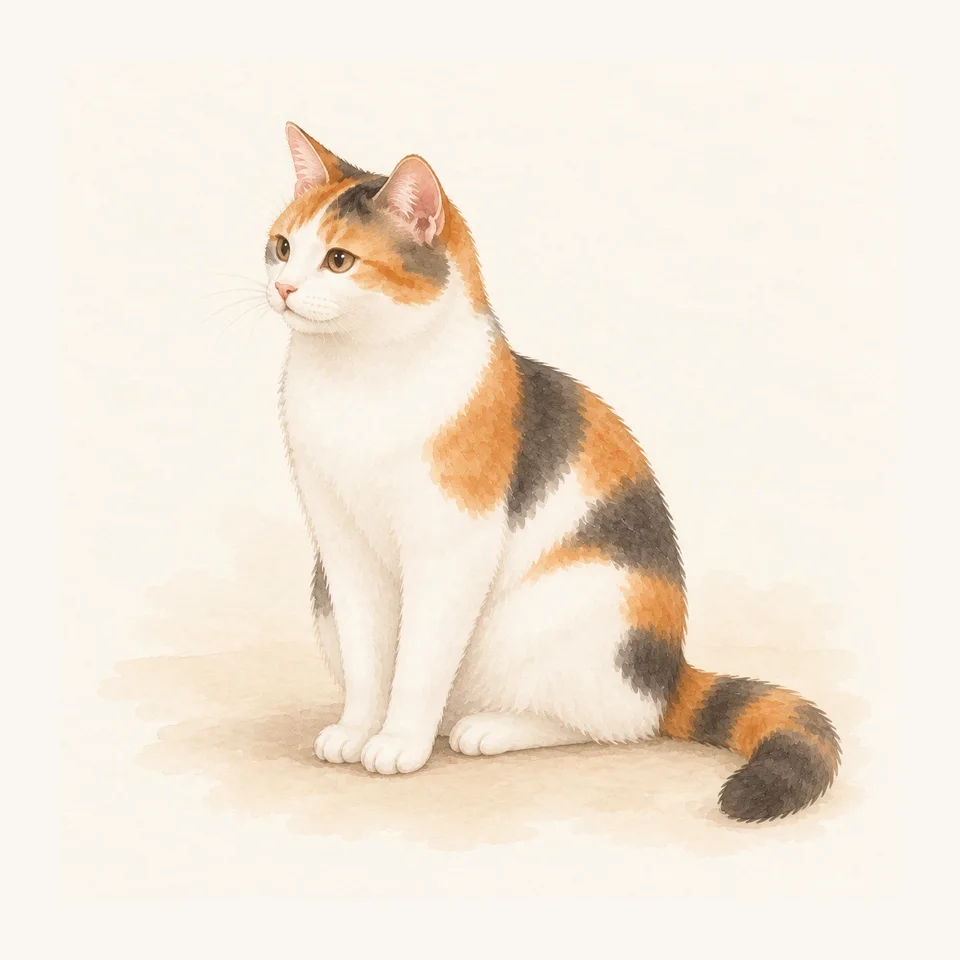
Prefers quiet · Likes the familiar · Stays close · Regular hours
In the evening, when you sit in your usual seat, it comes over and lies down against you. It hangs back when there are many people but likes to stay close to the ones it knows. Where and when it rests hardly changes.
Everyday scenes
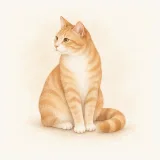
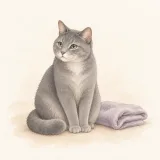
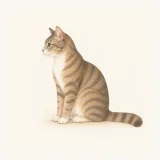
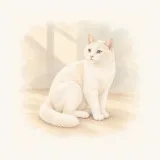
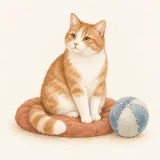
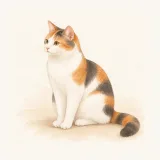
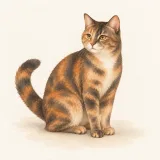
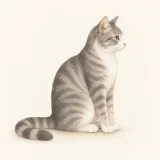
Four watercolor scenes from an imagined day, with a few questions to ask about your own cat. A real cat may choose differently from one day to the next.
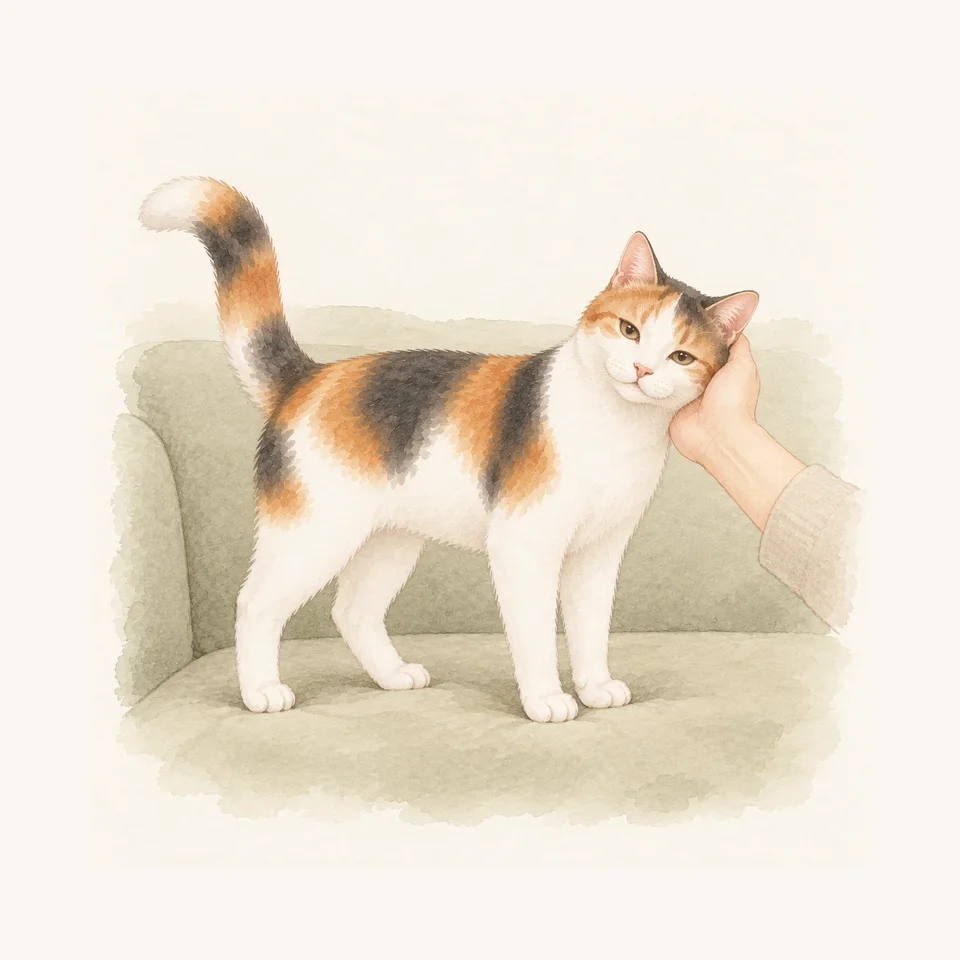
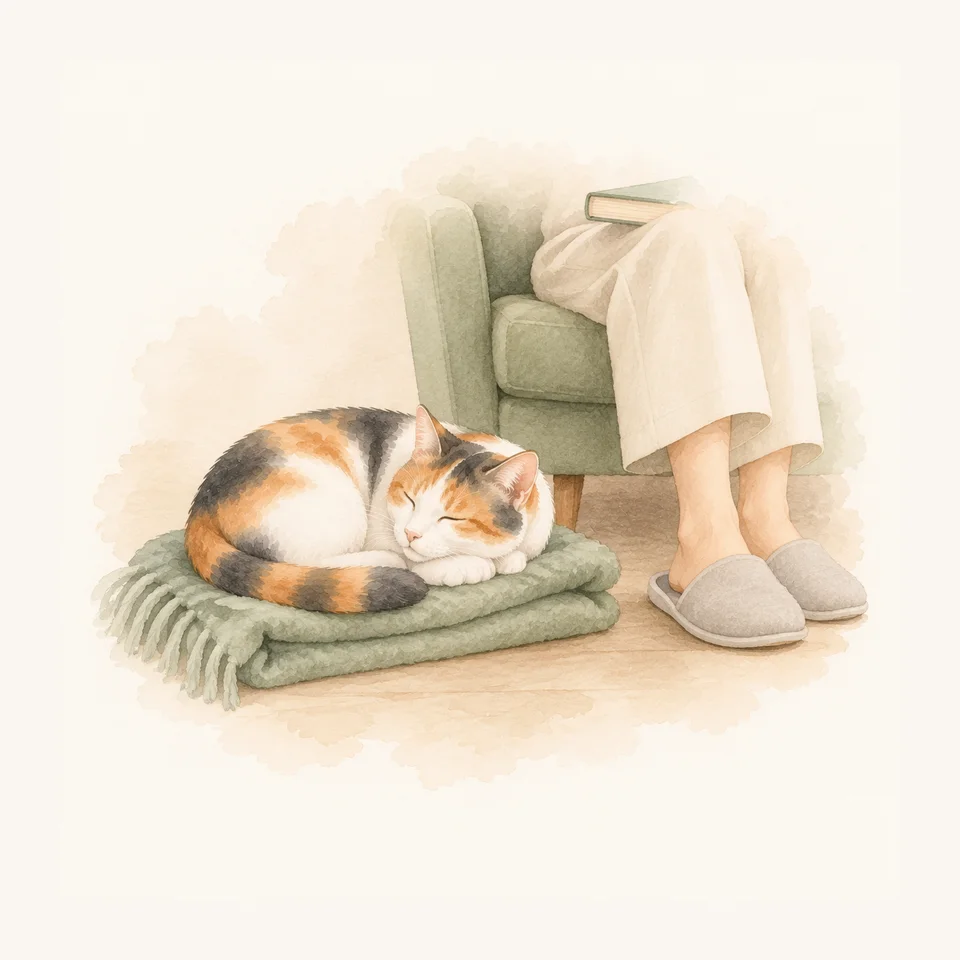
Put its blanket beside the chair where you sit in the evening; it settles best within reach of someone it knows. When visitors come, leave a door open to a quieter room so it can step away and come back later.
Whatever the type, every cat needs food, water, a litter box, safe rest and play within easy reach. Adjust the home to this cat and to the cats already living there; a type cannot decide whether cats should live together.
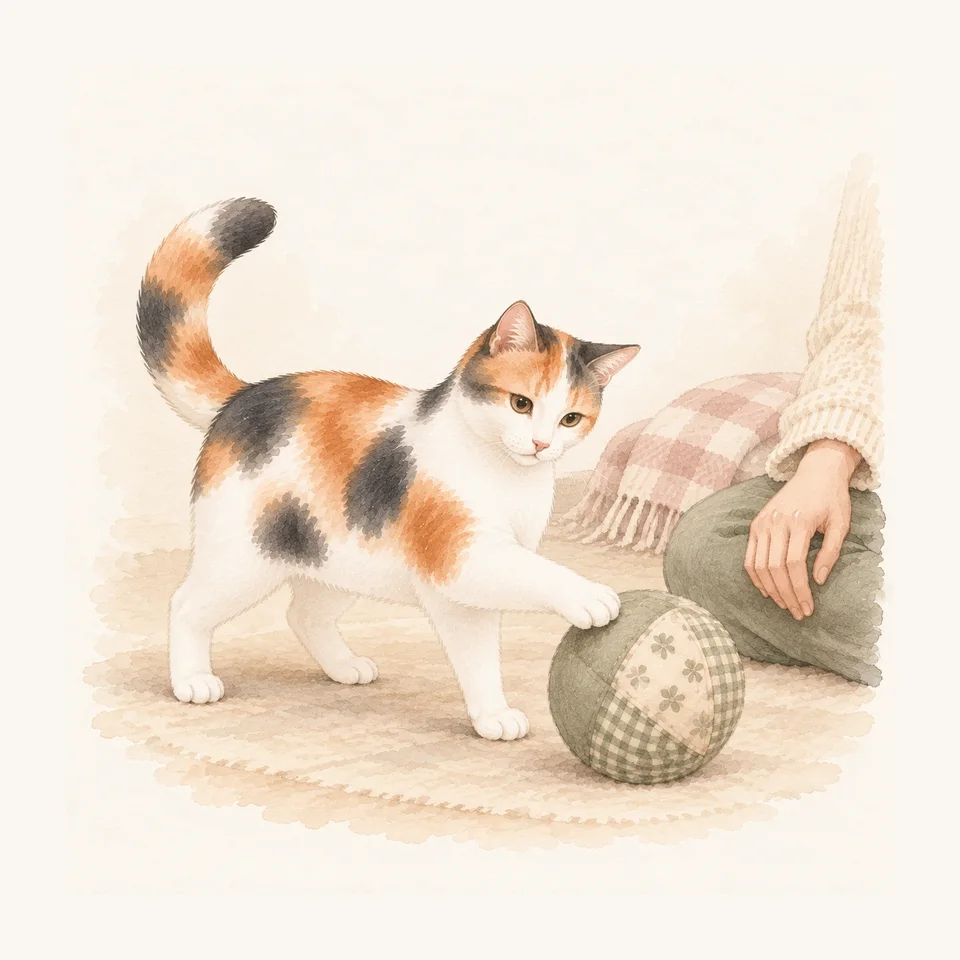
Hanging back when visitors arrive can make it seem timid. With the people it knows, it is the one that walks over and leans in. It chooses who gets close, and a full room is not where it shows that.
Your hand is on this cat most evenings, so you are well placed to notice its coat and skin. A bald patch, a lot of scratching, a spot it keeps licking, or head shaking is not part of its character. If it no longer leans into your hand, mention that to the vet as well.
A change from this cat’s usual pattern is a reason to check the body first. Note what changed and when it started, and ask your veterinarian instead of putting it down to the type.
Each of these types differs from ISFJ on one dimension.
This compares type descriptions for fun. How two cats actually get along depends on each cat and their home.
View comparisonsIs your cat outgoing or more reserved? Compare everyday social behavior, respect their choice of distance, and notice changes over time.
Just for fun. The questions draw on cat behavior research, but the quiz itself has not been scientifically validated and cannot diagnose anything.